No products in the cart.
The Future of Organic Farming in Sri Lanka: A Green Revolution
The Evolution of Agriculture in the Pearl of the Indian Ocean
Sri Lanka has always been an agrarian nation, with a history of cultivation that stretches back over two millennia. From the ancient hydraulic civilizations to the lush tea estates of the central highlands, our soil has always been our greatest treasure. However, as we move further into the 21st century, a significant transformation is taking place in the fields of our island. The future of organic farming in Sri Lanka is no longer just a niche movement for the health-conscious; it is becoming a cornerstone of our national food security and environmental sustainability.
For Sri Lankan families, the shift toward organic produce represents a return to our roots. It is a movement away from the heavy reliance on synthetic chemicals that characterized the Green Revolution of the mid-20th century, moving instead toward a system that respects the delicate balance of our island’s ecosystems. In this article, we explore the trends, challenges, and bright future of organic agriculture in Sri Lanka, and how regions like Nuwara Eliya are leading the way.
The Current Landscape: Where We Stand Today
The journey toward a fully organic Sri Lanka has seen its share of hurdles. The 2021 policy shift toward a 100% organic model was a bold step that, while facing significant implementation challenges, successfully ignited a national conversation about the safety of our food. Today, the approach is more measured and scientific. Farmers are increasingly adopting Integrated Pest Management (IPM) and organic composting techniques, supported by a growing demand from urban consumers who are more aware than ever of the links between diet and long-term health.
According to recent agricultural surveys, there is a steady increase in the number of certified organic farms across the island. While the transition takes time—often requiring three years for soil to be fully cleared of chemical residues—the long-term benefits for soil fertility and biodiversity are undeniable. Sri Lanka is currently one of the leading exporters of organic spices and coconut products, and the domestic market for organic vegetables is following a similar upward trajectory.
Nuwara Eliya: The Heartland of High-Country Organic Produce
When we talk about fresh vegetables in Sri Lanka, all eyes naturally turn to Nuwara Eliya. Known as ‘Little England’ for its cool climate and misty hills, this region is the backbone of our vegetable supply. The future of organic farming in Sri Lanka is intrinsically tied to the success of Nuwara Eliya’s farmers. The unique microclimate here allows for the cultivation of ‘up-country’ vegetables that cannot thrive elsewhere on the island.
The Advantage of the High Altitudes
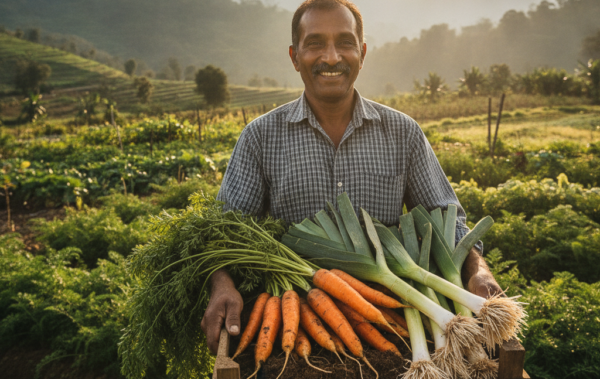
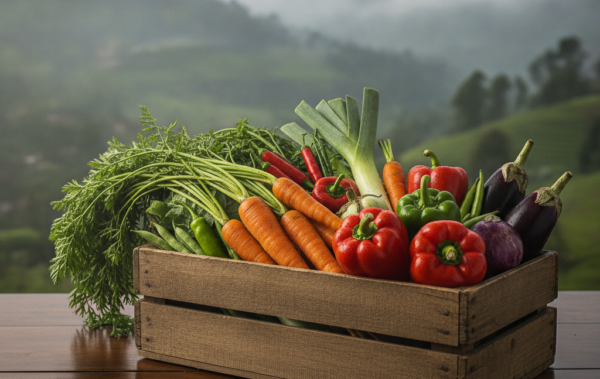
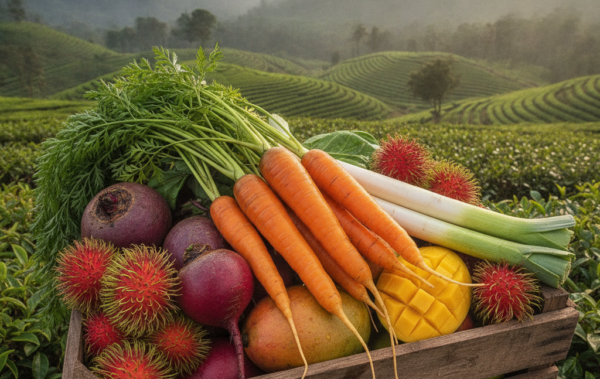
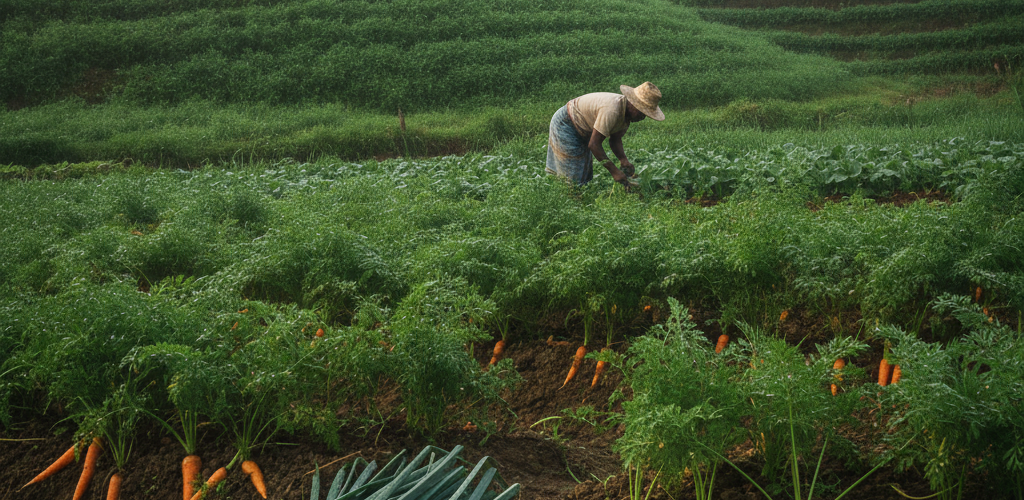
The rich, acidic soil and consistent rainfall of the central highlands provide an ideal environment for organic carrots, leeks, potatoes, and cabbage. In the past, these crops were heavily dependent on chemical fertilizers. However, a new generation of farmers in Nuwara Eliya is rediscovering traditional methods, such as using poultry manure and leaf mulch, to enrich the earth. This transition is vital because the central hills act as a watershed for the rest of the country; organic farming here means cleaner water for the rivers that flow down to the plains.
By choosing produce from these highland farms, consumers are not just getting tastier vegetables; they are supporting a movement that protects Sri Lanka’s primary water sources. This is where platforms like NunuFresh play a crucial role, by connecting these dedicated Nuwara Eliya farmers directly with families who value the purity of their food, ensuring that the ‘farm-to-table’ journey is as short and transparent as possible.
Technological Trends Shaping the Future
The future of organic farming is not just about looking back at ancient techniques; it is about marrying tradition with modern technology. Several emerging trends are set to redefine how we grow and consume organic food in Sri Lanka:
- Precision Agriculture: Using data to understand exactly how much water and organic nutrients a specific plot needs, reducing waste and increasing yields.
- Bio-Pesticides: The development of natural pest control methods using local botanical extracts like Neem and Ginger, which are safer for both the farmer and the consumer.
- Vertical and Urban Farming: As land becomes more scarce, organic hydroponics and vertical gardens are allowing urban families in Colombo and Kandy to grow their own greens.
- Traceability via Blockchain: In the near future, consumers may be able to scan a QR code on their vegetable pack to see exactly which farm in Nuwara Eliya it came from and when it was harvested.
Why Sri Lankan Families are Making the Switch
For the average Sri Lankan household, the decision to go organic is deeply personal. It is often driven by a desire to protect children from the harmful effects of pesticide residues, which have been linked to various health issues, including the prevalence of Chronic Kidney Disease of unknown etiology (CKDu) in certain provinces. Organic produce is often more nutrient-dense, containing higher levels of antioxidants and essential minerals because the plants are grown in ‘living’ soil rather than being fed synthetic nutrients.
Furthermore, the taste of organic produce is vastly superior. An organic carrot from Nuwara Eliya has a natural sweetness and crunch that chemically-grown varieties often lack. As more families realize that “food is medicine,” the demand for clean, organic produce continues to outpace supply, creating a sustainable economic model for our rural farmers.
Challenges on the Horizon
Despite the optimistic outlook, the path to a fully organic future is not without its thorns. The primary challenge remains the cost of production. Organic farming is labor-intensive, requiring more manual weeding and careful monitoring than conventional farming. Additionally, the certification process for ‘Certified Organic’ status can be expensive and bureaucratic for small-scale farmers.
To overcome these hurdles, there is a need for better infrastructure and logistics. Perishable vegetables need to be moved quickly from the cool hills of Nuwara Eliya to the warmer coastal cities. This is a gap that NunuFresh is actively filling, by streamlining the supply chain to ensure that organic produce remains affordable and accessible to the average Sri Lankan family without compromising on freshness.
The Role of the Consumer
The future of organic farming in Sri Lanka ultimately rests in the hands of the consumer. Every time you choose an organic leek or a bag of pesticide-free potatoes, you are casting a vote for a healthier Sri Lanka. Your purchase encourages more farmers to take the risk of transitioning away from chemicals. It supports the biodiversity of our island, protects our honeybees, and ensures that our soil remains fertile for generations to come.
Conclusion: A Greener, Healthier Sri Lanka
The future of organic farming in Sri Lanka is bright, driven by a harmonious blend of traditional wisdom and modern innovation. While the journey is long, the destination—a country where every child has access to clean, nutritious, and chemical-free food—is well worth the effort. From the misty slopes of Nuwara Eliya to your kitchen table, the green revolution is well underway.
Are you ready to bring the best of nature into your home? At NunuFresh, we are committed to bringing you the finest, freshest organic produce directly from the heart of Nuwara Eliya. By choosing us, you are supporting local farmers and investing in your family’s health. Explore our wide selection of fresh organic vegetables today and taste the difference of true purity!