No products in the cart.
Sustainable Farming in Sri Lanka’s Hill Country | NunuFresh
The mist-covered peaks of Nuwara Eliya, often referred to as ‘Little England,’ are more than just a scenic tourist destination. They are the heart of Sri Lanka’s agricultural engine. For generations, these fertile highlands have provided the island with a bounty of cool-climate vegetables. However, as the global climate shifts and the demand for healthier food grows, a quiet revolution is taking place among the terraced slopes: a return to sustainable farming practices. At NunuFresh, we believe that understanding where your food comes from is the first step toward a healthier lifestyle and a greener planet.
Why Sustainable Farming Matters in the Central Highlands
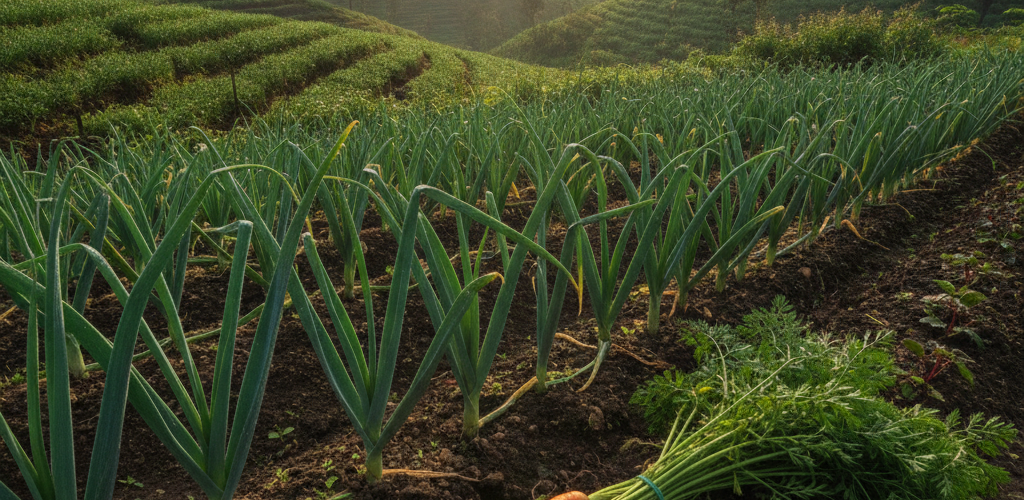
Sri Lanka’s Hill Country is characterized by its steep terrain and unique microclimates. While these conditions are perfect for growing crops like leeks, carrots, and strawberries, they also make the land vulnerable. Traditional intensive farming, which often relies heavily on synthetic fertilizers and pesticides, has led to significant soil erosion and the degradation of natural water sources in the region.
Sustainable farming is not just a trend; it is a necessity for the survival of the Sri Lankan ecosystem. By adopting eco-friendly methods, farmers in the Nuwara Eliya district are protecting the soil that feeds us. According to recent agricultural reports, sustainable land management in the highlands can reduce soil loss by up to 40%, ensuring that the land remains productive for the next generation of Sri Lankan families.
The Core Pillars of Sustainable Agriculture in Nuwara Eliya
Sustainable farming is a holistic approach that treats the farm as a living ecosystem. Here are the primary practices being championed by the forward-thinking farmers we work with at NunuFresh:
1. Soil Health and Organic Composting
The foundation of any organic farm is the soil. In the Hill Country, farmers are moving away from chemical NPK fertilizers and returning to organic composting. By using green manure, livestock waste, and crop residues, farmers enrich the soil with organic matter. This not only provides essential nutrients to the plants but also improves the soil’s ability to retain water—a crucial factor during the dry spells between monsoons.
2. Terrace Farming and Erosion Control
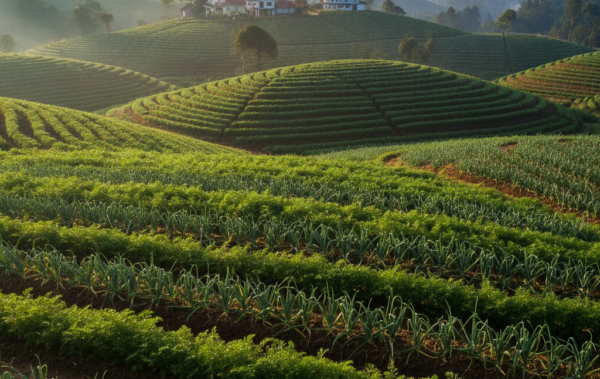
One of the most iconic sights in the Sri Lankan highlands is the beautifully carved terraces. This ancient technique is a masterclass in sustainability. By creating level steps on steep hillsides, farmers significantly slow down water runoff during heavy rains. This prevents the nutrient-rich topsoil from being washed away into the valleys below, preserving the land’s fertility naturally.
3. Crop Rotation and Intercropping
Monoculture—growing the same crop over and over—depletes specific nutrients and encourages pests. Sustainable farmers in Nuwara Eliya practice clever crop rotation. For example, planting legumes like beans after a harvest of potatoes helps naturally fix nitrogen back into the soil. Intercropping, such as growing carrots alongside onions, acts as a natural pest deterrent, reducing the need for intervention.
4. Integrated Pest Management (IPM)
Instead of blanket-spraying toxic chemicals, sustainable farming utilizes Integrated Pest Management. This involves using natural predators, pheromone traps, and botanical extracts like Neem oil to manage pest populations. This ensures that the vegetables you receive from NunuFresh are free from harmful residues, making them safer for your children and elders.
The Economic and Social Impact on Sri Lankan Farmers
Sustainable farming is as much about people as it is about plants. In Sri Lanka, over 25% of the population is involved in agriculture. When farmers transition to organic and sustainable methods, they reduce their dependency on expensive imported chemicals. This creates a more resilient local economy.
Furthermore, sustainable practices often require more specialized labor, creating jobs within the local Nuwara Eliya community. By choosing organic produce, Sri Lankan consumers are directly supporting the livelihoods of small-scale farmers who are committed to doing things the right way. It is a cycle of prosperity that begins in the soil and ends at your dinner table.
The Nutritional Edge: Why Organic Produce Tastes Better
Have you ever noticed that a carrot from the Nuwara Eliya highlands tastes sweeter and crunchier than a mass-produced one? This isn’t just your imagination. Studies have shown that organic produce often contains higher levels of antioxidants and vitamins. Because sustainable crops are grown in nutrient-dense soil and are allowed to mature at their natural pace, they develop a more complex flavor profile.
When you source your vegetables through NunuFresh, you are getting produce that has been harvested at the peak of its nutritional value and delivered with its freshness intact. The shorter the time from the farm to your kitchen, the more nutrients are preserved for your family.
Statistics: The Growth of Organic Farming in Sri Lanka
- Rising Demand: The domestic market for organic food in Sri Lanka has seen a steady growth of approximately 10-15% annually over the last five years.
- Land Use: Sri Lanka currently has over 30,000 hectares of land dedicated to organic agriculture, placing it among the leaders in the region for organic land share.
- Environmental Impact: Sustainable farms in the highlands report a 25% increase in local biodiversity, including beneficial insects and birds that help maintain the ecological balance.
How You Can Support Sustainable Farming
As a consumer in Colombo, Gampaha, or anywhere else in Sri Lanka, you have the power to shape the future of our agriculture. Every time you choose organic, you are voting for a cleaner environment and a healthier Sri Lanka. Here is how you can make a difference:
- Choose Seasonal: Eat what is in season in the Hill Country to reduce the carbon footprint of your food.
- Reduce Waste: Use every part of the vegetable, including the skins of organic carrots and the greens of beetroots.
- Support Local Platforms: Use services that bridge the gap between the highland farms and your home, ensuring fair prices for farmers.
Conclusion: A Greener Future for Sri Lanka
Sustainable farming in the Hill Country is a journey back to our roots, enhanced by modern ecological science. It is about respecting the land that gives us so much and ensuring that the misty hills of Nuwara Eliya remain vibrant and productive for centuries to come. By prioritizing health, environment, and community, we can all enjoy the freshest, most delicious produce while protecting the natural beauty of our island home.
Ready to taste the difference of sustainable farming? Explore our wide selection of fresh, farm-to-table organic produce at NunuFresh. From the crisp air of Nuwara Eliya straight to your doorstep, we bring you the very best of Sri Lanka’s highlands. Shop our organic collection today!