No products in the cart.
From Nuwara Eliya Farms to Your Table: The Journey of Fresh Garlic
The Aromatic Soul of the Sri Lankan Kitchen
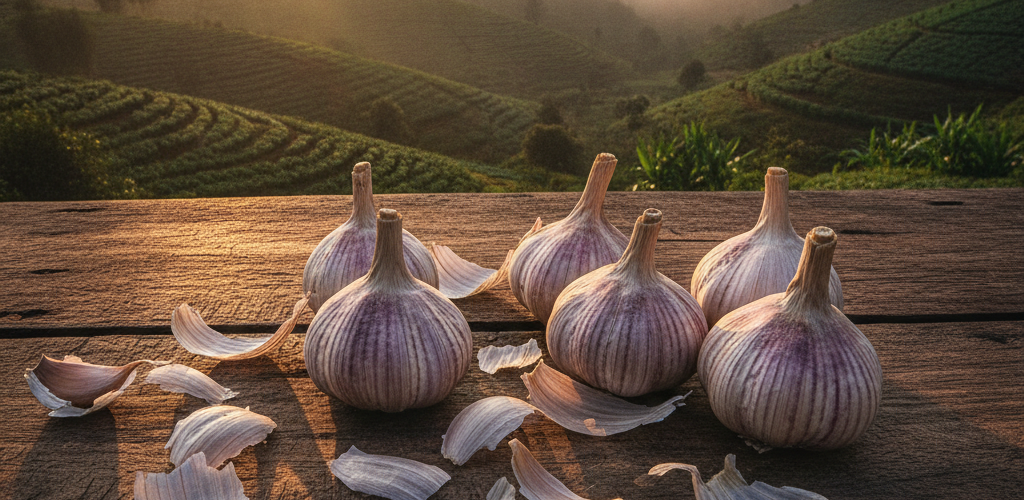
There is a sound that defines the start of almost every meal in a Sri Lankan household: the rhythmic ‘thwack’ of a heavy knife crushing a clove of garlic against a wooden chopping board. This is followed quickly by the irresistible sizzle as the garlic hits hot coconut oil, releasing an aroma that signals something delicious is on the way. But have you ever stopped to wonder about the journey that little clove took before it reached your kitchen? For the garlic sourced through NunuFresh, that journey begins in the mist-shrouded, emerald-green hills of Nuwara Eliya.
In this comprehensive guide, we explore the lifecycle of garlic, the unique conditions of Sri Lankan highland farming, and why choosing organic produce from Nuwara Eliya makes a world of difference for your health and your palate.
The Perfect Terroir: Why Nuwara Eliya Garlic is Special
Not all garlic is created equal. While the supermarket shelves are often stocked with large, bleached white bulbs imported from overseas, the garlic grown in the central highlands of Sri Lanka—specifically in the Nuwara Eliya and Welimada regions—possesses a character all its own.
The ‘terroir’ (a French term referring to the environmental factors like soil and climate) of Nuwara Eliya is perfectly suited for high-quality bulb crops. At an elevation of over 1,800 meters, the cool temperatures, high humidity, and rich, well-draining soil provide the ideal nursery for garlic. Local Sri Lankan garlic varieties are typically smaller than their imported counterparts, but they pack a significantly more potent punch. They are richer in essential oils, particularly allicin, which gives garlic its signature pungency and medicinal properties.
The Role of Climate and Soil
Garlic requires a period of cool weather to initiate bulb formation. The crisp mornings and misty afternoons of the hill country act as a natural catalyst. Furthermore, the soil in these regions is naturally rich in organic matter, though it requires careful management to maintain its fertility. Organic farmers in the region focus on building soil health through composting and natural fertilizers, ensuring that every bulb harvested is dense with nutrients rather than just water and chemical residues.
The Life Cycle: From Clove to Harvest
The journey of garlic is a lesson in patience. Unlike leafy greens that can be harvested in a matter of weeks, garlic is a slow-growing crop that demands months of attention.
1. Planting the Seed Cloves
Interestingly, garlic is rarely grown from seeds. Instead, farmers use ‘seed cloves’—individual cloves taken from the best-performing bulbs of the previous harvest. In the fertile patches of Nuwara Eliya, these cloves are hand-planted with the pointed end facing the sky. This manual process ensures that each plant has enough space to breathe and grow without competition.
2. The Vegetative Phase
Over the next few months, the garlic plant focuses on growing its green, strap-like leaves. Each leaf represents a layer of the garlic skin that will eventually protect the bulb. During this time, organic farmers must be vigilant against pests and fungal diseases, which thrive in damp highland conditions. Instead of harsh synthetic pesticides, many farmers use neem-based sprays and traditional companion planting techniques to keep the crop healthy.
3. Bulbing and Maturation
As the days lengthen and temperatures shift, the plant stops producing new leaves and begins to direct all its energy underground. This is when the magic happens: the base of the stem swells, and the individual cloves begin to differentiate. It is a delicate time; too much water can cause the bulbs to rot, while too little will result in small, stunted garlic.
The Art of Harvesting and Curing
Timing is everything when it comes to harvesting garlic. If harvested too early, the cloves won’t be fully formed; too late, and the protective skins may burst, reducing the shelf life. Farmers in Nuwara Eliya look for the tell-tale sign: the bottom two or three leaves turning brown while the top leaves remain green.
Once pulled from the earth, the garlic isn’t ready for the kitchen just yet. It must undergo a process called ‘curing.’ The bulbs are laid out in well-ventilated, shaded areas for several weeks. This allows the outer skins to dry and tighten around the cloves, sealing in the moisture and flavor. This curing process is what allows fresh garlic to be stored for months without losing its potency.
Why Organic Garlic Matters for Your Health
In recent years, there has been a growing awareness regarding the chemicals used in industrial garlic farming. Imported garlic is often treated with methyl bromide (a fumigant) to prevent sprouting and kill insects, and bleached with chlorine to achieve that unnaturally white look.
By choosing organic garlic from NunuFresh, you are opting for a product that is:
- Chemical-Free: No synthetic pesticides or herbicides are used in the growing process.
- Nutrient-Dense: Studies show that organic crops often contain higher levels of antioxidants and minerals because they grow in biologically active soil.
- Sustainable: Organic farming protects the delicate ecosystem of the Sri Lankan highlands, preventing chemical runoff into our precious water sources.
The Nutritional Powerhouse: More Than Just Flavor
Garlic has been used as both food and medicine for thousands of years. In the context of Sri Lankan Ayurveda and modern nutrition, garlic is revered for its diverse health benefits:
1. Heart Health and Blood Pressure
Garlic is well-known for its ability to improve cardiovascular health. It helps in reducing high blood pressure (hypertension) and lowering ‘bad’ LDL cholesterol levels. The sulfur compounds in garlic are the primary drivers behind these heart-protective effects.
2. Immune System Support
Feeling a cold coming on? A dose of fresh garlic might be the answer. Allicin, the active compound released when garlic is crushed, has potent antimicrobial and antiviral properties. It helps stimulate the white blood cells that fight off infections.
3. Detoxification and Digestion
In high doses, the sulfur compounds in garlic have been shown to protect against organ damage from heavy metal toxicity. Additionally, garlic acts as a prebiotic, feeding the beneficial bacteria in your gut and aiding overall digestion.
Garlic in the Sri Lankan Kitchen: Tips and Tricks
The way you prepare garlic significantly affects its health benefits and flavor profile. Here are a few tips for the modern Sri Lankan cook:
- The ‘Crush and Wait’ Rule: To maximize the production of allicin, crush or mince your garlic and let it sit for 10 minutes before adding it to heat. This allows the enzymatic reaction to fully take place.
- Tempering (Thala Ganna): When making a traditional Sri Lankan curry, add garlic during the tempering stage. Let it turn a golden brown but be careful not to burn it, as burnt garlic becomes bitter.
- Garlic for Pol Sambol: Adding a single, small clove of raw Nuwara Eliya garlic to your Pol Sambol can elevate the flavor profile while providing a raw nutritional boost.
From Farm to Table: The NunuFresh Connection
The biggest challenge for many Sri Lankan families is accessing truly fresh, farm-gate produce without the middleman markups and the loss of quality that happens in traditional wholesale markets. This is where NunuFresh steps in. By working directly with farmers in Nuwara Eliya, NunuFresh ensures that the garlic you receive hasn’t been sitting in a warehouse for months.
This direct-to-consumer model means shorter transit times, which translates to fresher garlic with a higher moisture content and more vibrant flavor. When you buy from NunuFresh, you are not just buying groceries; you are supporting a sustainable supply chain that empowers local farmers and brings the best of the hill country directly to your doorstep in Colombo or elsewhere in the island.
How to Store Your Fresh Garlic
To keep your organic garlic fresh for as long as possible, follow these simple rules:
- Keep it Cool and Dry: A mesh bag or a wire basket in a dark pantry is ideal.
- Avoid the Fridge: Cold temperatures can actually encourage garlic to sprout, which changes the flavor and texture.
- Provide Airflow: Never store garlic in plastic bags, as the lack of ventilation will lead to mold growth.
Conclusion: A Clove of Excellence
The journey of garlic from the misty slopes of Nuwara Eliya to your dinner table is a testament to the hard work of Sri Lankan farmers and the bounty of our natural landscape. Every time you peel a clove of fresh, organic garlic, you are participating in a tradition of health and flavor that spans generations.
By choosing high-quality, locally sourced produce, you are making a conscious decision for your family’s well-being and the health of our environment. Next time you’re preparing a meal, remember the journey of that humble garlic bulb—and let its rich, pungent aroma remind you of the fertile hills of Nuwara Eliya.
Ready to taste the difference? Explore the wide selection of fresh, organic vegetables and produce at NunuFresh today and bring the goodness of Nuwara Eliya farms directly to your kitchen.