No products in the cart.
How to Choose the Freshest Corn: A Guide for Sri Lankan Shoppers
The Golden Standard: Why Picking the Right Corn Matters
In Sri Lanka, few things are as universally loved as a perfectly roasted or boiled ear of corn. Whether you are enjoying a snack from a roadside vendor on a misty drive through the hill country or preparing a healthy family meal at home, the quality of your corn makes all the difference. However, walking through a local pola or supermarket can be overwhelming. How do you know which cob is bursting with sweetness and which one will be starchy and dull?
Choosing the freshest corn is more than just a culinary skill; it is a way to ensure your family gets the maximum nutritional benefit from this versatile grain. In this guide, we will walk you through the expert secrets of selecting the best produce, with a special focus on the high-quality organic corn grown in the fertile soils of Nuwara Eliya.
The Science of Sweetness: Why Freshness is Critical
To understand how to choose corn, you first need to understand its chemistry. Unlike many other vegetables, corn begins to lose its flavor the moment it is harvested. This is because the natural sugars in the kernels immediately start converting into starch. Research shows that some varieties of sweet corn can lose up to 50% of their sugar content within 24 hours if kept at room temperature.
In Sri Lanka, where the tropical heat can accelerate this process, sourcing corn that has been handled carefully is vital. This is why many families are turning to services like NunuFresh, which prioritizes a direct line from the farm to your doorstep, minimizing the time corn spends in transit and preserving that essential sweetness.
Step 1: Inspect the Husk (The Protective Layer)
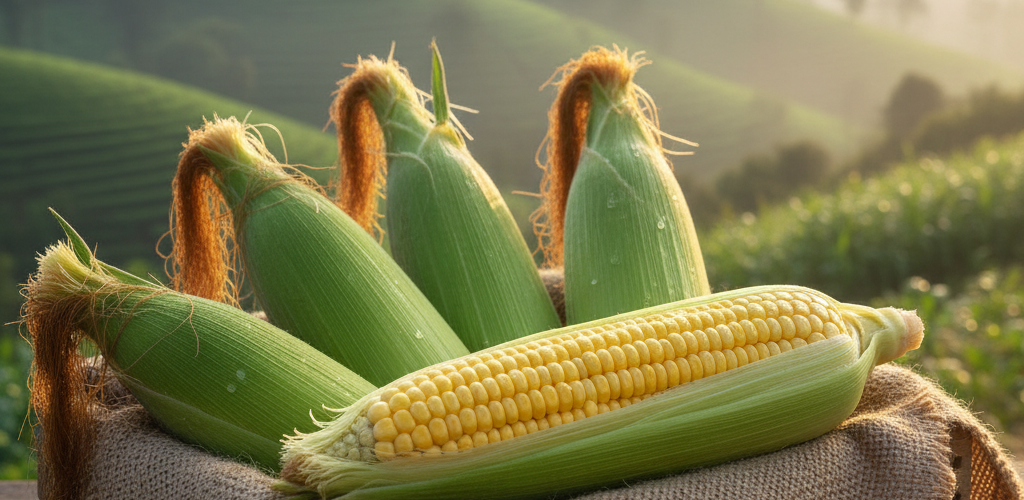
The husk is the corn’s natural packaging, and it tells a vivid story about how recently the ear was picked. When scanning the bins at the market, look for the following:
- Bright Green Color: The husk should be a vibrant, healthy green. If the leaves are starting to turn yellow or look parchment-paper brown, the corn is old and likely drying out.
- Tight Wrap: A fresh ear of corn will have a husk that is wrapped tightly around the cob. If the husk feels loose or is falling away, it indicates that the moisture inside the kernels has begun to evaporate.
- Moisture Content: Feel the husk. It should feel slightly damp and cool to the touch, not dry or brittle.
Step 2: Examine the Silks (The Telltale Sign)
The ‘silks’ are the long, thread-like strands peeking out from the top of the cob. While many people find them annoying when cleaning corn, they are actually the best indicator of what is happening inside the husk.
What to Look For:
- Golden Brown and Sticky: Ideally, the silks should be a light golden brown or even a pale pinkish-tan, and they should feel slightly sticky or moist. This indicates a high sugar and moisture content.
- The Smell Test: Fresh silks should have a faint, sweet, grassy aroma. If they smell musty or sour, put the corn back.
What to Avoid:
If the silks are black, extremely dry, or brittle, the corn is past its prime. Furthermore, if the silks feel slimy, it is a sign that decay has started to set in at the tip of the cob.
Step 3: The Feel Test (No Peeking Required!)
One of the most common mistakes shoppers make is peeling back the husk to look at the kernels. In many Sri Lankan markets, vendors frown upon this because once you open the husk, the corn dries out even faster and is exposed to flies and dust. You can actually ‘see’ the kernels with your hands.
Run your fingers along the length of the cob through the husk. You are looking for a firm, plump feel from the base all the way to the tip. If you feel significant gaps where kernels should be, or if the cob feels ‘holey,’ it likely didn’t pollinate correctly and will have missing rows. If the kernels feel soft or squishy, the corn is overripe and will be starchy rather than sweet.
The Nuwara Eliya Advantage: Why Origin Matters
In Sri Lanka, the region of Nuwara Eliya is synonymous with premium produce. The high altitude, cool temperatures, and rich, well-drained soil provide the perfect microclimate for growing sweet corn. Unlike the corn grown in the dry zones, which is often tougher and used for flour, Nuwara Eliya corn is prized for its tender skin and high juice content.
By choosing organic produce from this region, you are also avoiding the synthetic pesticides and fertilizers that can strip the soil of its natural vitality. Organic farming in the central highlands focuses on soil health, which translates directly into the nutrient density of the corn you eat. This is the standard of quality that NunuFresh brings to Sri Lankan households, ensuring that the ‘Nuwara Eliya freshness’ isn’t lost during the journey to Colombo or beyond.
The Organic Difference: Health and Flavor
When you choose organic corn, you aren’t just making a choice for the environment; you are making one for your health. Organic corn is rich in ferulic acid, an antioxidant that is actually enhanced when the corn is cooked. It is also a fantastic source of dietary fiber, Vitamin B, and essential minerals like magnesium.
Because organic corn is grown without systemic chemicals, the husk acts as a pure, clean barrier. When you boil organic corn, you can even use the husks and silks to make a nutritious ‘corn silk tea,’ a traditional remedy known for its diuretic and anti-inflammatory properties—something you wouldn’t want to do with chemically treated produce.
How to Store Corn to Maintain Freshness
Once you’ve used these tips to pick the perfect ears, don’t let your hard work go to waste by storing them incorrectly. Follow these steps:
- Keep the Husk On: Do not peel your corn until you are ready to cook it. The husk is the best way to retain moisture.
- Refrigerate Immediately: Cold temperatures slow down the conversion of sugar to starch. Place the ears in a breathable bag in the vegetable crisper drawer of your fridge.
- Eat Early: For the best flavor, try to consume your corn within 2 days of purchase.
- Freezing for Later: If you have a large harvest, blanch the cobs in boiling water for a few minutes, shock them in ice water, and then cut the kernels off to freeze in airtight bags.
Conclusion: Bring the Farm to Your Table
Choosing the freshest corn is a simple pleasure that rewards you with incredible flavor and nutrition. By looking for vibrant husks, moist silks, and firm cobs, you can shop with confidence at any market. Remember that the journey of your food matters just as much as your selection process.
If you want to skip the guesswork and enjoy the very best that Sri Lankan agriculture has to offer, explore the selection at NunuFresh. We specialize in bringing the crisp, organic goodness of Nuwara Eliya farms directly to your kitchen, ensuring that every ear of corn you serve is as fresh as the day it was picked.
Ready to taste the difference? Click here to browse our latest harvest of organic vegetables and have the freshest produce delivered straight to your door!