No products in the cart.
Nuwara Eliya’s Fresh Mushroom Journey to Your Table
The Magic of Nuwara Eliya: The Ideal Cradle for Mushrooms
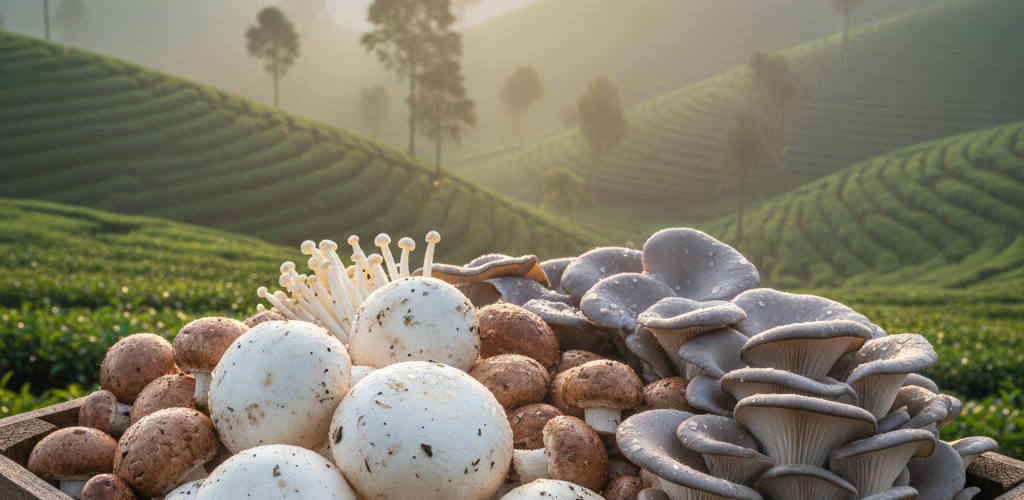
Deep in the heart of Sri Lanka’s central highlands lies Nuwara Eliya, often affectionately called “Little England.” Known for its rolling tea estates and mist-covered peaks, this region offers more than just breathtaking views. For the humble mushroom, Nuwara Eliya provides a sanctuary. With altitudes reaching over 1,800 meters and temperatures ranging between 10°C and 20°C, the climate is a perfect mimic of the cool, damp forests where mushrooms naturally thrive.
Unlike the sweltering heat of the lowlands, the crisp air and high humidity of the hills allow mushrooms to grow slowly, developing a firm texture and a rich, earthy flavor that is hard to replicate elsewhere. At NunuFresh, we recognize that the journey of a premium mushroom begins with this unique geography, ensuring that every bite you take carries the essence of the Sri Lankan highlands.
The Lifecycle of a Mushroom: From Spore to Harvest
The journey of a mushroom is a fascinating biological process that requires patience, precision, and a deep respect for nature. Unlike green plants, mushrooms do not use photosynthesis; they are fungi that thrive on organic matter. In the specialized farms of Nuwara Eliya, this process is carefully managed to ensure the highest organic standards.
1. Substrate Preparation
The journey begins with the ‘bed’ or substrate. In Sri Lankan organic farming, this usually consists of sterilized sawdust, rice straw, or cotton waste. This medium is enriched with organic nutrients to provide the mushroom with everything it needs to grow. In Nuwara Eliya, many farmers use local agricultural by-products, creating a sustainable cycle that benefits the entire ecosystem.
2. Inoculation and Incubation
Once the substrate is ready, it is ‘seeded’ with mushroom spores, known as spawn. These bags are then kept in dark, climate-controlled rooms. Over the next few weeks, a white, thread-like network called mycelium begins to colonize the substrate. This is the ‘root system’ of the mushroom, and its health determines the quality of the final produce.
3. Fruiting and Harvesting
When the mycelium has fully matured, the environmental conditions are shifted. The temperature is dropped slightly, and humidity is increased to trigger the ‘fruiting’ stage. Small pinheads emerge and rapidly grow into the recognizable mushroom caps we see in the market. Each mushroom is hand-picked at the peak of its maturity to ensure it retains its moisture and nutritional value.
Nutritional Powerhouse: Why Sri Lankans Love Mushrooms
Mushrooms have become a staple in the Sri Lankan diet, not just for their taste but for their incredible health benefits. As more families move toward organic living, mushrooms have taken center stage as a “superfood.”
- Immune System Support: Mushrooms are rich in selenium and beta-glucans, which help strengthen the immune system—a vital benefit for growing children and the elderly.
- Vitamin D Source: Mushrooms are one of the few non-animal sources of Vitamin D. When exposed to the gentle sunlight of the hills, they naturally increase their Vitamin D content.
- Plant-Based Protein: For the many vegetarian families in Sri Lanka, mushrooms serve as an excellent meat substitute, providing essential amino acids without the cholesterol.
- Low Calorie, High Fiber: They are perfect for weight management, offering a satisfying “meaty” texture while being low in calories and high in dietary fiber.
Popular Varieties Grown in the Hills
While there are thousands of mushroom species, Nuwara Eliya farmers focus on varieties that thrive in the cool climate and resonate with local palates:
Oyster Mushrooms (Makandura)
The most popular variety in Sri Lanka, Oyster mushrooms are prized for their delicate texture and mild flavor. They are incredibly versatile, appearing in everything from spicy curries to crispy deep-fried snacks.
Button Mushrooms
Often seen in more continental dishes, Button mushrooms require very specific cool temperatures, making Nuwara Eliya the primary hub for their cultivation in Sri Lanka. They are firm, juicy, and perfect for sautéing with garlic and butter.
Abalone and Milky Mushrooms
These varieties are known for their thicker, meatier stalks and are often used in “devilled” dishes, providing a texture that stands up well to the bold spices of Sri Lankan cuisine.
The NunuFresh Promise: Bridging the Gap
The biggest challenge with fresh mushrooms is their short shelf life. From the moment they are harvested in Nuwara Eliya, the clock starts ticking. Traditional supply chains often involve multiple middle-men, meaning by the time a mushroom reaches a grocery store in Colombo or Kandy, it may have lost its crispness and nutritional potency.
This is where NunuFresh changes the game. By connecting directly with organic farmers in Nuwara Eliya, we bypass the long delays. Our logistics are designed to move produce from the cool mountain air to your doorstep in the shortest time possible. When you order through NunuFresh, you aren’t just getting mushrooms; you are getting the freshness of the morning harvest, delivered with care to maintain the cold chain.
Tips for Handling and Storing Fresh Mushrooms
To make the most of your farm-fresh mushrooms, proper storage is key. Since mushrooms are about 90% water, they can easily become soggy if mishandled.
- Don’t Wash Until Ready: Mushrooms act like sponges. If you wash them and then store them, they will spoil quickly. Instead, wipe them with a damp cloth or a soft brush just before cooking.
- Use Paper Bags: Never store mushrooms in a sealed plastic bag. The lack of airflow causes moisture buildup. Use a brown paper bag, which allows the mushrooms to “breathe” while absorbing excess moisture.
- Keep it Cool: Store them in the main compartment of your refrigerator, rather than the high-humidity crisper drawer.
Bringing the Taste of Nuwara Eliya to Your Kitchen
In Sri Lanka, the “Mushroom Curry” (Bimmal Uyana) is a beloved dish. The secret to a great mushroom curry lies in the freshness of the produce. Using organic mushrooms from the hills ensures that the gravy is infused with an authentic earthy aroma that mass-produced mushrooms simply cannot match. Whether you are making a spicy devilled mushroom dish to pair with fried rice or a simple stir-fry for a quick dinner, the quality of the ingredient is what makes the meal memorable.
Conclusion: A Journey of Quality and Care
The journey of a mushroom from the misty farms of Nuwara Eliya to your dining table is a testament to Sri Lanka’s rich agricultural heritage and the dedication of our local farmers. By choosing organic, highland-grown produce, you are supporting sustainable farming practices and ensuring your family receives the best nutrition nature has to offer.
At NunuFresh, we are proud to be a part of this journey, ensuring that the distance between the farm and your kitchen is bridged with speed, transparency, and a commitment to quality. Experience the difference of truly fresh, organic produce today.
Ready to taste the freshness of the hills? Explore our selection of fresh organic mushrooms and highland produce at NunuFresh and bring the best of Nuwara Eliya to your home.