No products in the cart.
How Highland Farmers Grow Organic Leeks in Nuwara Eliya
The Magic of the Mist: Growing Organic Leeks in Nuwara Eliya
In the misty, emerald-green highlands of Sri Lanka, specifically in the district of Nuwara Eliya, a unique agricultural tradition thrives. Known as ‘Little England’ for its cool climate and colonial charm, this region is the heart of Sri Lanka’s ‘Up-Country’ vegetable production. Among the carrots, cabbages, and potatoes, one vegetable stands tall—literally. The leek (Allium ampeloprasum) is a staple of Sri Lankan cuisine, providing the essential crunch and aroma to our beloved fried rice, chop suey, and vegetable soups.
But not all leeks are created equal. In recent years, a growing movement of dedicated highland farmers has returned to traditional, organic methods. These farmers eschew synthetic chemicals in favor of harmony with nature. At NunuFresh, we work closely with these stewards of the land to bring their labor of love directly to your kitchen. In this article, we take a deep dive into the fascinating journey of an organic leek, from the fertile soils of Nuwara Eliya to your dinner table.
The Nuwara Eliya Advantage: Why the Highlands?
Organic farming is as much about the environment as it is about the technique. Nuwara Eliya sits at an elevation of approximately 1,889 meters (6,198 ft) above sea level. This high altitude provides the perfect temperate microclimate for leeks, which prefer cool temperatures between 13°C and 24°C.
The soil in the highlands is naturally rich in organic matter, often characterized by a peaty, loamy texture that retains moisture while allowing for adequate drainage. For an organic farmer, this soil is gold. Unlike the intensive chemical farming seen in some low-country regions, highland organic farmers focus on ‘feeding the soil to feed the plant,’ ensuring that the leeks develop a deep, complex flavor that mass-produced varieties simply cannot match.
Step 1: Selecting the Right Seeds
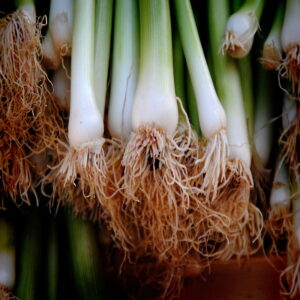
The journey begins with the seed. Organic farmers in Sri Lanka often select varieties that are resilient to local pests and diseases. While several international varieties like ‘Giant Musselburgh’ are popular, many local farmers keep their own heirloom seeds or source high-quality organic seeds that haven’t been treated with fungicides. The goal is to produce a leek with a long, thick white stalk (the blanched part) and vibrant green flags (the leaves).
The Organic Foundation: Soil Preparation
In organic highland farming, the soil isn’t just a medium; it’s a living ecosystem. Before a single seed is sown, farmers spend weeks preparing the beds. This process involves:
- Incorporating Green Manure: Farmers often grow cover crops or use wild sunflowers (Tithonia diversifolia) which are abundant in the hills, to chop and bury into the soil to increase nitrogen levels.
- Cattle and Poultry Manure: Well-composted manure from local highland farms is tilled into the earth. This provides a slow-release source of nutrients that lasts the entire 4-5 month growing cycle of the leek.
- Bio-char and Wood Ash: Many farmers add wood ash from their hearths to the soil, which provides potassium and helps regulate the pH levels of the naturally acidic highland soil.
By avoiding synthetic urea and NPK fertilizers, these farmers ensure that the groundwater in the delicate Nuwara Eliya watershed remains pure and free from nitrate contamination.
The Nursery and Transplanting Process
Leeks are rarely sown directly into the field. Instead, they begin their lives in carefully tended nursery beds. The tiny, black seeds are sown in rows and protected from the heavy highland rains by polytunnels or natural leaf canopies. After about 6 to 8 weeks, when the seedlings are roughly the thickness of a pencil, they are ready for the ‘big move.’
Transplanting is a labor-intensive process. Farmers create deep furrows or individual holes (about 15-20cm deep). Each seedling is dropped into a hole, but here is the trick: the hole is not entirely filled with soil. This technique allows the leek to grow upwards while the base remains shaded from the sun, which is the first step in achieving that sought-after white stem.
The Secret to the White Stem: Blanching
If you’ve ever wondered why the bottom half of a leek is white and tender while the top is green and fibrous, the answer is ‘blanching.’ In organic farming, this is done manually through a process called ‘earthing up.’
As the leek grows taller, the farmer carefully mounds soil around the base of the plant. By excluding light from the stalk, photosynthesis is prevented in that specific area, keeping the tissue white and sweet. This process is repeated 2 or 3 times during the growth cycle. It requires a gentle hand and a watchful eye to ensure that soil doesn’t get trapped deep between the leaf sheaths, which can make cleaning the leeks difficult for the consumer.
Natural Pest and Disease Management
One of the biggest challenges for organic farmers in the humid highlands is managing pests like thrips and diseases like purple blotch without the use of toxic pesticides. Sri Lankan highland farmers use a variety of traditional ‘Pesticide-Free’ methods:
- Neem Oil Sprays: A natural repellent derived from the neem tree, which disrupts the life cycle of harmful insects.
- Panchagavya: An organic fertilizer and pesticide made from five products of the cow (milk, curd, ghee, dung, and urine), fermented to create a powerful bio-stimulant.
- Crop Rotation: Farmers never plant leeks in the same plot two seasons in a row. They rotate them with potatoes or legumes to break the life cycle of soil-borne pathogens.
- Sticky Traps: Bright yellow and blue cards coated with adhesive are placed around the fields to catch flying insects naturally.
This dedication to natural management means that when you buy produce from NunuFresh, you are consuming vegetables that are free from the chemical residues often found in conventional highland produce.
Harvesting: The Final Reward
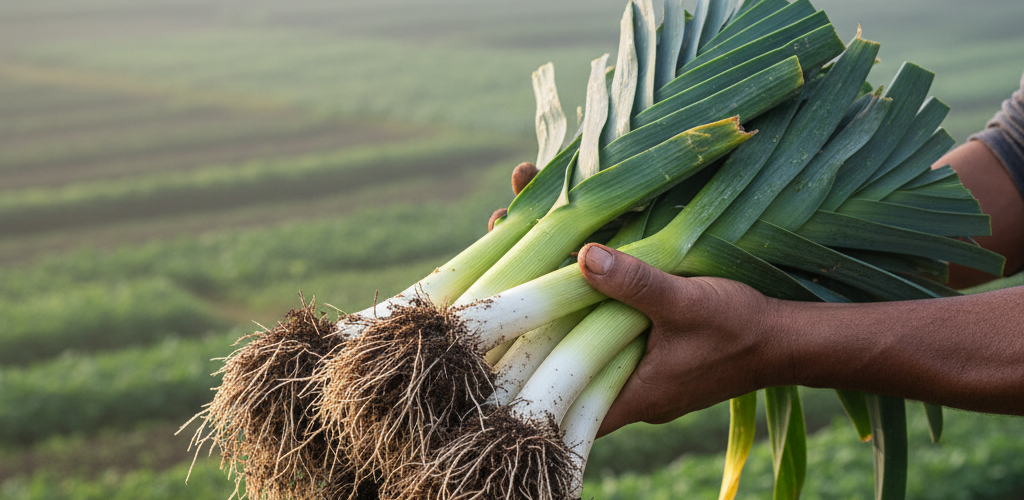
Leeks are patient vegetables. Depending on the weather, they can take anywhere from 120 to 150 days to reach maturity. Unlike many other vegetables, leeks don’t have a ‘strict’ harvest date; they can stay in the ground until they reach the desired size. However, for the best culinary quality, farmers harvest them when the stalks are about 1 to 2 inches in diameter.
Harvesting is done by hand using a fork to loosen the soil around the roots. The leeks are then gently pulled, shaken to remove excess earth, and trimmed. In the organic tradition, the roots and outer leaves are often left on the farm to be composted, returning nutrients back to the soil for the next cycle.
Why Choose Organic Leeks?
Beyond the environmental benefits, organic leeks offer superior nutritional value. Studies have shown that organic vegetables often contain higher concentrations of antioxidants and polyphenols. Because they grow more slowly than chemically-fed plants, their cellular structure is denser, leading to a more intense flavor. When you sauté an organic leek from Nuwara Eliya, the aroma is noticeably more pungent, and the texture remains buttery and soft without becoming mushy.
Supporting Our Highland Heroes
By choosing organic, you are not just making a healthy choice for your family; you are supporting the livelihoods of small-scale Sri Lankan farmers who are committed to sustainable agriculture. These farmers face higher risks and more labor-intensive days to ensure that the food we eat is safe and nutritious.
At NunuFresh, we believe in shortening the distance between the farm and your fork. We source our leeks directly from verified organic growers in the Nuwara Eliya region, ensuring they are harvested at their peak and delivered to you with all their highland freshness intact.
Conclusion: Bring the Highlands Home
The next time you slice into a crisp, white leek, take a moment to imagine the misty hills of Nuwara Eliya, the rich organic soil, and the hardworking farmers who nurtured that plant for nearly half a year. Organic farming is a testament to patience and respect for the earth.
Ready to taste the difference that organic, highland-grown produce makes? Explore the NunuFresh marketplace today and discover our wide selection of fresh vegetables, fruits, and organic essentials delivered straight from the heart of Sri Lanka to your doorstep. Your journey toward a healthier, more sustainable lifestyle starts with a single, fresh ingredient.
Shop Fresh from NunuFresh
These products mentioned in this article are available for delivery: