No products in the cart.
Growing Organic Bitter Gourd in the Sri Lankan Highlands
The Art of Growing Organic Bitter Gourd in Sri Lanka’s Misty Highlands
In the heart of Sri Lanka’s hill country, where the mist clings to the emerald slopes of Nuwara Eliya, a unique agricultural tradition thrives. Known locally as ‘Karawila,’ the bitter gourd is a staple in Sri Lankan households, revered as much for its medicinal properties as for its distinctive, bold flavor. While bitter gourd is grown across the island, there is something truly special about the organic varieties cultivated by highland farmers. These farmers, many of whom have passed down their knowledge through generations, are now leading a movement toward sustainable, chemical-free agriculture.
For many Sri Lankan families, choosing organic produce isn’t just a trend; it’s a return to our roots. In this article, we take a deep dive into the meticulous process of how highland farmers grow organic bitter gourd, the challenges they overcome, and why the cool climate of Nuwara Eliya produces some of the finest produce available at NunuFresh.
The Nuwara Eliya Advantage: Soil and Climate
Nuwara Eliya, often referred to as ‘Little England,’ sits at an elevation of approximately 1,889 meters. This high altitude provides a temperate climate that is vastly different from the tropical heat of the lowlands. While bitter gourd is traditionally a warm-season crop, the specific microclimates in the highland valleys allow for year-round cultivation with unique results.
The soil in these regions is rich in organic matter, often enriched by years of natural decomposition from the surrounding forests. Highland farmers focus on maintaining this soil health through ‘regenerative’ practices. Unlike commercial farms that rely heavily on synthetic NPK fertilizers, organic farmers in Nuwara Eliya utilize well-cured cow manure, poultry litter, and homemade compost. This organic enrichment ensures the soil remains porous and nutrient-dense, which is essential for the deep root system of the Karawila vine.
Selecting the Right Seeds
The journey of an organic bitter gourd begins with the seed. Traditional Sri Lankan varieties, such as the ‘Thinnavely White’ or the dark green ‘Matale Green,’ are often preferred by organic farmers. These indigenous varieties have a natural resilience to local pests and diseases compared to imported hybrid seeds. Many highland farmers practice seed saving, where they select the healthiest, most robust gourds from a harvest, allow them to ripen fully on the vine until they turn bright orange, and then harvest the crimson-coated seeds for the next season.
The Organic Growing Process: Step-by-Step
Growing bitter gourd organically requires more patience and manual labor than conventional farming. Here is how the highland farmers manage the process:
1. Land Preparation and Pandal Construction
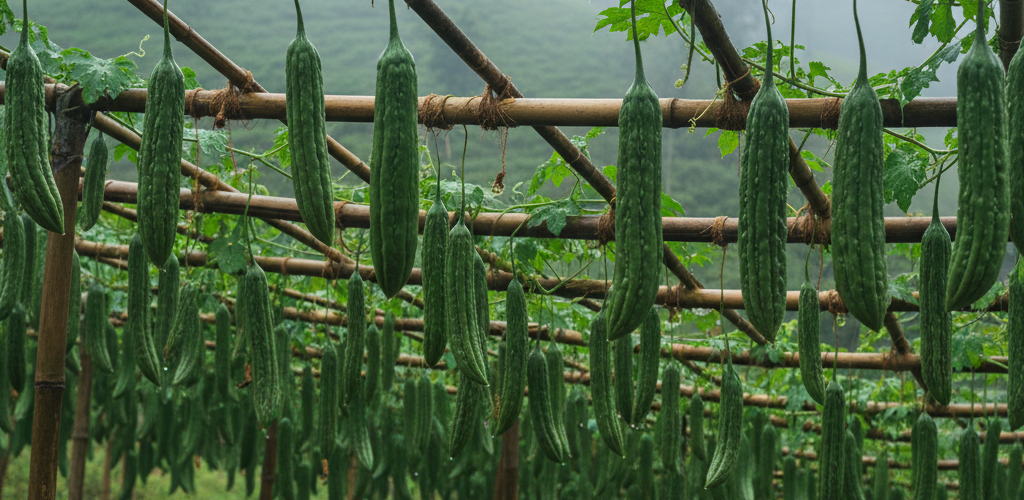
Bitter gourd is a climbing vine. In the highlands, farmers build elaborate ‘pandals’ or trellises using bamboo poles and coconut husk string (coir). This elevated system is crucial for several reasons: it keeps the fruit off the damp ground (preventing rot), ensures maximum sunlight exposure, and allows for better air circulation, which reduces the risk of fungal infections in the humid highland air.
2. Natural Pest Management
One of the biggest challenges in organic farming is managing the fruit fly (Bactrocera cucurbitae). Instead of spraying chemical pesticides, Nuwara Eliya’s organic farmers use ingenious traditional methods:
- Pheromone Traps: Simple containers with natural attractants that capture male flies.
- Neem Oil Sprays: A solution made from neem seeds acts as a natural repellent and disrupts the life cycle of harmful insects without harming bees or butterflies.
- Paper Wrapping: In many small-scale organic farms, you will see individual bitter gourds wrapped in old newspapers or specialized paper bags. This physical barrier protects the young fruit from stings.
3. Companion Planting
Organic farmers often plant marigolds or basil around the perimeter of the bitter gourd beds. These plants act as ‘trap crops’ or natural repellents, drawing pests away from the Karawila vines. This biodiversity is a hallmark of the organic farms partnered with NunuFresh, where the goal is to create a balanced ecosystem rather than a sterile monoculture.
The Nutritional Powerhouse: Why Organic Matters
Bitter gourd is world-renowned for its health benefits, particularly in managing blood sugar levels. It contains ‘Polypeptide-p’ (an insulin-like compound) and ‘Charantin,’ which helps increase glucose uptake. When you choose organic Karawila, you are ensuring that these medicinal benefits are not overshadowed by chemical residues.
Highland bitter gourds tend to have a firmer texture and a more nuanced bitterness. Because they grow slightly slower in the cooler mountain air, the nutrients have more time to concentrate within the fruit. They are rich in Vitamin C, Vitamin A, and folate, making them an essential part of a healthy Sri Lankan diet.
From the Highlands to Your Kitchen
The logistics of bringing organic produce from Nuwara Eliya to Colombo and beyond is a delicate task. Because organic vegetables aren’t treated with preservatives or waxes, they must be transported quickly and carefully. This is where the farm-to-table model becomes vital. By sourcing directly from these highland farmers, NunuFresh ensures that the bitter gourd you receive still carries the freshness of the mountain air.
When the produce arrives, it is characterized by its vibrant green color and turgid skin. Whether you are making a classic ‘Karawila Sambol’ with thinly sliced fried gourd, onions, and lime, or a nutritious stuffed bitter gourd curry, the quality of the organic produce shines through in every bite.
Supporting Local Organic Farmers
By choosing organic bitter gourd, Sri Lankan consumers are doing more than just eating healthy. They are supporting a sustainable livelihood for highland farmers. Organic farming protects the water sources in Nuwara Eliya—which feed many of the country’s major rivers—from chemical runoff. It preserves the soil for future generations and ensures that the traditional farming knowledge of our elders is not lost to industrialization.
Conclusion
The story of the organic bitter gourd is a testament to the harmony between nature and the hardworking farmers of the Sri Lankan highlands. It is a crop that requires respect, care, and a deep understanding of the land. At NunuFresh, we are proud to bridge the gap between these dedicated growers and your family table.
Are you ready to taste the difference of true highland organic produce? Explore our latest harvest and bring the freshness of Nuwara Eliya into your home today.
Discover our range of fresh, organic vegetables at NunuFresh.lk and support sustainable Sri Lankan agriculture with every purchase.