No products in the cart.
Organic vs Conventional Produce: What’s the Real Difference?
Understanding Your Food: The Great Organic Debate
Walking through a grocery aisle or browsing an online marketplace in Sri Lanka today is different than it was a decade ago. You are no longer just looking at a carrot; you are looking at a choice between ‘Organic’ and ‘Conventional.’ For many Sri Lankan families, especially those conscious of health and the environment, this choice can be confusing. Is the price difference justified? Does it actually taste better? Does it really impact your health?
At its core, the difference between organic and conventional produce lies in how the food is grown, processed, and handled. In the lush, mist-shrouded hills of Nuwara Eliya, where agriculture is a way of life, these methods determine not just the quality of the vegetable on your plate, but the health of the soil for generations to come.
What Does ‘Organic’ Actually Mean?
Organic farming is a holistic system designed to optimize the productivity and fitness of diverse communities within the agro-ecosystem. In simpler terms, it is farming that works with nature, not against it. Organic farmers do not use synthetic fertilizers, sewage sludge, irradiation, or genetic engineering (GMOs).
The Organic Standard
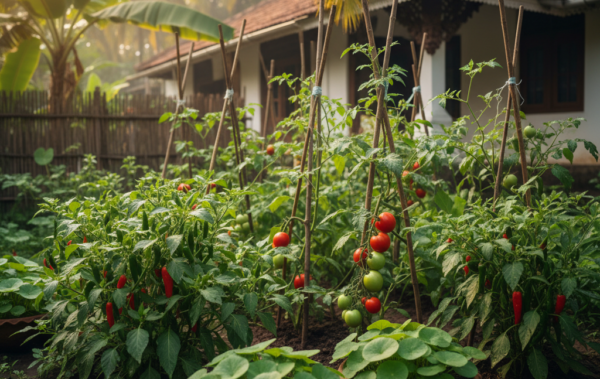
- Natural Fertilizers: Instead of chemical pellets, organic farmers use compost, green manure, and bone meal to enrich the soil.
- Pest Control: Rather than spraying synthetic pesticides, farmers use crop rotation, natural predators, and biological pest management.
- Soil Health: Organic farming focuses on building ‘living soil’ rich in microbial life, which naturally supports plant growth.
What is Conventional Produce?
Conventional farming is the standard industrial approach to agriculture. It was designed to maximize yield and minimize costs to feed a rapidly growing global population. While effective at producing large quantities of food, it relies heavily on external chemical inputs.
The Conventional Approach
- Synthetic Inputs: Uses chemical fertilizers (like Urea) to promote rapid growth.
- Chemical Protection: Employs synthetic herbicides and insecticides to eliminate weeds and pests quickly.
- Mass Production: Often involves monocropping (growing the same crop over a large area year after year), which can deplete soil nutrients over time.
The Nutritional Face-Off: Is Organic Healthier?
One of the most debated topics is whether organic food is more nutritious. While both types of produce provide essential vitamins and minerals, research suggests organic produce may have a slight edge in specific areas.
Antioxidant Levels
A landmark study published in the British Journal of Nutrition analyzed 343 peer-reviewed studies and found that organic crops had substantially higher concentrations of antioxidants—ranging from 19% to 69% higher than conventional crops. Antioxidants are linked to a reduced risk of chronic diseases, including certain cancers and cardiovascular diseases.
Pesticide Residue
The most significant difference is the presence of pesticide residues. Conventional produce is much more likely to have detectable levels of synthetic chemicals. While these levels are usually within ‘safe’ limits set by regulators, many health-conscious consumers prefer to avoid them entirely, especially for children and pregnant women whose bodies are more sensitive to chemical exposure.
Cadmium Levels
Cadmium is a toxic metal that can accumulate in the body. The same British study found that organic crops had significantly lower levels of cadmium compared to conventional ones, likely due to the avoidance of certain synthetic fertilizers used in industrial farming.
The Nuwara Eliya Connection: Why Origin Matters
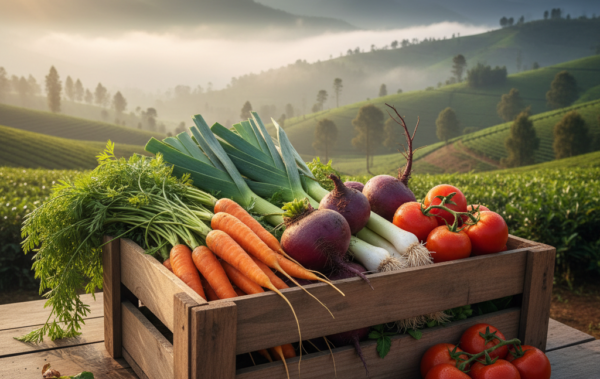
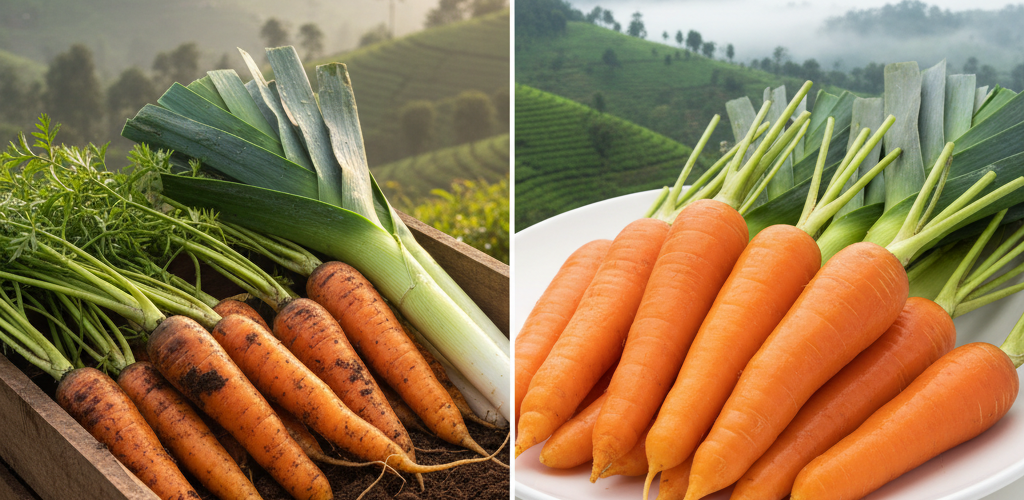
In Sri Lanka, the geography of where your food is grown plays a massive role in its quality. Nuwara Eliya, often called ‘Little England,’ possesses a unique microclimate and high-altitude soil that is ideal for temperate vegetables like carrots, leeks, cabbage, and strawberries. When these are grown organically in the rich Upcountry soil, the results are exceptional.
Because organic farming relies on the natural minerals in the soil rather than water-heavy chemical fertilizers, the vegetables often have a lower water content and a higher concentration of sugars and minerals. This is why an organic carrot from a Nuwara Eliya farm often tastes ‘sweeter’ and ‘crunchier’ than its conventional counterpart. Platforms like NunuFresh prioritize this direct-from-farm connection, ensuring that the natural vibrancy of Nuwara Eliya produce isn’t lost in long supply chains.
Environmental Impact: Thinking of the Future
The choice between organic and conventional goes beyond personal health; it is a choice about the planet. Sri Lanka has faced significant challenges regarding soil degradation and water pollution due to over-reliance on chemical inputs.
1. Soil Preservation
Organic farming practices, such as cover cropping and composting, actually build soil matter. This prevents erosion—a major issue in the hilly terrains of Nuwara Eliya—and ensures the land remains fertile for decades.
2. Water Safety
Conventional farming can lead to ‘runoff,’ where synthetic fertilizers and pesticides wash into local streams and groundwater. In a country like Sri Lanka, where many communities rely on local water sources, organic farming protects the purity of our water systems.
3. Biodiversity
Organic farms are often buzzing with life. By avoiding toxic sprays, these farms provide a safe haven for bees, butterflies, and birds, which are essential for pollination and a balanced ecosystem.
The Cost Factor: Why is Organic More Expensive?
It is no secret that organic produce usually carries a higher price tag. This is not just a ‘premium’ for the label; it reflects the true cost of growing food sustainably.
- Labor Intensive: Organic farmers spend more time on manual weeding and natural pest management.
- Slower Growth: Without chemical boosters, plants grow at their natural pace, which means lower yields per acre but higher quality.
- Certification and Handling: Maintaining organic integrity during transport and storage requires specialized processes.
However, many families view this as a ‘health insurance’ investment. By paying a little more now for nutrient-dense, chemical-free food, you are investing in long-term wellness and supporting local farmers who care for the land.
How to Make the Switch in Sri Lanka
You don’t have to change your entire pantry overnight. Here are some tips for Sri Lankan families looking to incorporate more organic produce:
- Prioritize the ‘Thin Skins’: Focus on buying organic for fruits and vegetables where you eat the skin (like tomatoes, strawberries, and leafy greens), as these are most likely to carry pesticide residues.
- Know Your Source: Trust is essential. Look for suppliers like NunuFresh that bridge the gap between small-scale organic farmers in Nuwara Eliya and your doorstep, ensuring transparency in how the food was grown.
- Eat Seasonally: Organic produce is most affordable and freshest when it is in season.
Conclusion: The Real Difference
The real difference between organic and conventional produce isn’t just a label; it’s a difference in philosophy. Conventional farming focuses on the quantity of the harvest, while organic farming focuses on the quality of the life—the life of the soil, the life of the farmer, and the life of the consumer.
By choosing organic, you are choosing produce that is grown with respect for the Earth, harvested at its peak, and delivered with its natural nutrients intact. For the families of Sri Lanka, it is a step toward a cleaner, healthier, and more sustainable future.
Ready to experience the difference for yourself? Explore our curated selection of farm-fresh, organic produce harvested straight from the hills of Nuwara Eliya and delivered directly to your home.