No products in the cart.
Beginner’s Guide to Organic Living in Sri Lanka
In recent years, a quiet revolution has been taking root across the emerald landscapes of Sri Lanka. From the bustling streets of Colombo to the misty hills of Nuwara Eliya, more families are asking a vital question: “What exactly is in my food?” This curiosity is the first step toward organic living—a lifestyle that isn’t just a modern trend, but a return to the sustainable, chemical-free wisdom of our ancestors.
What Does “Organic” Really Mean in Sri Lanka?
For a beginner, the term “organic” can feel like a buzzword. In the Sri Lankan context, organic produce refers to fruits, vegetables, and grains grown without synthetic pesticides, chemical fertilizers, or genetically modified organisms (GMOs). Instead, organic farmers rely on natural processes, such as composting, crop rotation, and biological pest control.
In Sri Lanka, the National Organic Control Unit (NOCU) and the Sri Lanka Standards Institution (SLSI) oversee organic regulations. However, for many local smallholders, the Participatory Guarantee System (PGS) is a popular, community-based certification that ensures transparency and trust between the farmer and the consumer. When you choose organic, you aren’t just buying food; you are supporting a system that respects the soil, the water, and the person who tilled the land.
The Health and Environmental Benefits
Why make the switch? The reasons are as diverse as our island’s biodiversity. Research suggests that organic vegetables often contain higher levels of antioxidants—up to 69% more in some cases—than conventionally grown produce. Because they aren’t forced to grow rapidly with synthetic nitrogen, organic plants develop more robust cellular structures, often leading to a richer, more authentic taste.
1. Reduced Chemical Exposure
Conventional farming in Sri Lanka often relies heavily on agrochemicals. By choosing organic, you significantly reduce your intake of pesticide residues. This is particularly important for children and the elderly, whose systems are more sensitive to toxic accumulation.
2. Protecting Our Soil and Water
The Central Highlands, particularly the Nuwara Eliya district, are the water towers of Sri Lanka. Traditional chemical farming can lead to runoff that pollutes our rivers and degrades the soil. Organic farming, however, builds soil organic matter, improves water retention, and protects the pollinators—like our local bees—that are essential for a healthy ecosystem.
The Nuwara Eliya Advantage
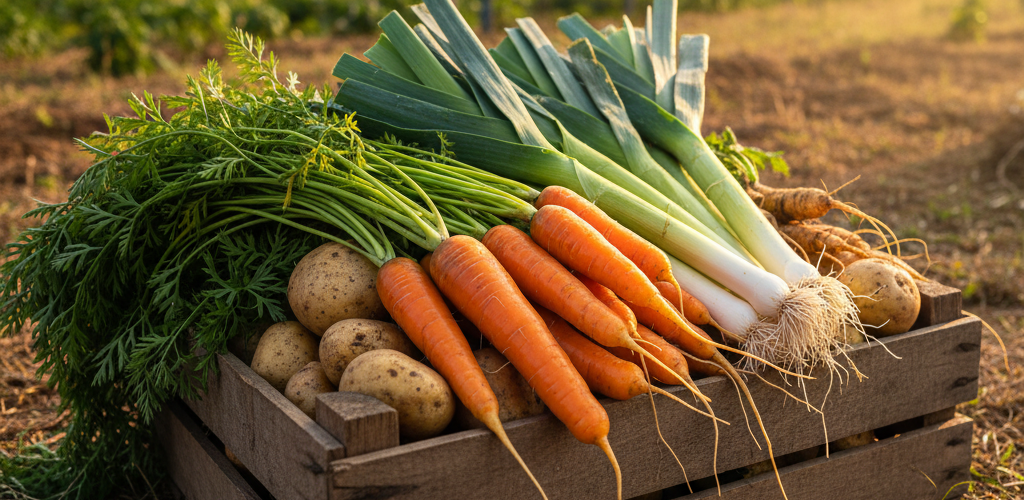
If you have ever visited the “Little England” of Sri Lanka, you know why Nuwara Eliya is the heart of our vegetable production. The cool, temperate climate and the unique Red Yellow Podsolic soil provide the perfect conditions for “English vegetables” like carrots, leeks, cabbage, and potatoes.
Nuwara Eliya is currently at the forefront of the organic movement. Farmers in this region are increasingly adopting sustainable management practices to combat land degradation. When you source produce from platforms like NunuFresh, you are accessing vegetables that have been grown in these fertile, high-altitude soils and delivered with their nutrients intact, bridging the gap between the farm and your kitchen table.
How to Start Your Organic Journey: A Step-by-Step Guide
Transitioning to an organic lifestyle doesn’t have to happen overnight. In fact, a slow and steady approach is often more sustainable for a family budget. Here is how you can begin:
1. Start with the “High-Risk” Vegetables
Some vegetables are more prone to pesticide absorption than others. In Sri Lanka, leafy greens (like Gotukola or Mukunuwenna), tomatoes, and bell peppers are great places to start your organic journey. These are often called the “Dirty Dozen” equivalent in local markets. Swap these for organic versions first.
2. Know Your Source
Transparency is the most important part of organic living. Ask questions at your local market or choose trusted online marketplaces. For instance, NunuFresh works directly with Nuwara Eliya farmers, ensuring that the journey from the soil to your doorstep is short and transparent, which preserves the freshness and nutritional value of the produce.
3. Embrace Seasonality
Nature knows best. Eating seasonally in Sri Lanka means enjoying pumpkins and brinjals when they are naturally abundant. Seasonal produce is often cheaper and requires fewer interventions to grow, making it easier for farmers to maintain organic standards.
4. Start a Kitchen Garden
You don’t need an acre of land to be an organic producer. A few pots on a balcony or a small corner of your backyard can yield organic chilies, curry leaves, and herbs. Use your kitchen waste to create a simple compost pile—this is the “black gold” of organic gardening.
Overcoming Common Challenges
The two biggest hurdles for beginners are often price and availability. While organic produce can sometimes be more expensive due to the higher labor costs and lower yields of natural farming, many families find they save money in the long run through better health and reduced food waste (as organic produce is often sturdier and lasts longer when stored correctly).
To manage costs, try buying staples like organic heirloom rice (such as Suwandel or Pachchaperumal) in bulk. These traditional varieties are naturally hardier and often grown with minimal intervention, making them an affordable entry point into organic eating.
Conclusion: A Greener Future for Sri Lanka
Organic living is more than just a diet; it is a commitment to the future of Sri Lanka. By choosing organic, you are protecting our beautiful island’s environment, supporting the hardworking farmers of Nuwara Eliya, and ensuring your family consumes the highest quality nutrients possible.
Remember, every organic carrot or leek you buy is a vote for a cleaner, healthier, and more sustainable Sri Lanka. Start small, stay curious, and enjoy the vibrant flavors that only nature can provide.
Ready to taste the difference? Explore our curated selection of fresh, farm-to-table organic produce at NunuFresh and bring the goodness of Nuwara Eliya straight to your home.