No products in the cart.
The Rise of Organic Certification in Sri Lankan Agriculture
Introduction: A New Era for Sri Lankan Farming
For generations, the emerald hills of Nuwara Eliya and the fertile plains of the dry zone have been the lifeblood of Sri Lanka. However, the way we grow our food is undergoing a profound transformation. In recent years, the conversation around organic certification in Sri Lanka has moved from a niche interest to a national priority. Sri Lankan families are becoming increasingly conscious of what goes onto their dinner tables, leading to a surge in demand for produce that is not only fresh but also verified as safe and chemical-free.
This shift isn’t just about a trend; it’s about returning to our roots with the added layer of modern scientific standards. As we see more ‘organic’ labels in supermarkets and online marketplaces, it’s essential to understand what these certifications actually mean for the health of our children and the sustainability of our beautiful island.
Understanding Organic Certification in the Local Context
Organic certification is a rigorous process where agricultural products are verified to have been grown without synthetic fertilizers, pesticides, or genetically modified organisms (GMOs). In Sri Lanka, this movement is governed by specific standards that ensure transparency from the farm to the fork.
The Role of the Sri Lanka Standards Institution (SLSI)
The SLS 1324:2018 is the primary national standard for organic agriculture. This standard provides a framework for production, processing, labeling, and marketing. When a farm in the central highlands or the North Central province receives this certification, it means they have adhered to strict guidelines regarding soil management, pest control, and water quality.
The Export Development Board (EDB) and Global Standards
Sri Lanka has long been a global leader in organic exports, particularly in tea, spices, and coconut products. The EDB has been instrumental in helping local farmers achieve international certifications such as USDA Organic (USA) and EU Organic (Europe). This global recognition has paved the way for local consumers to expect the same high quality for the vegetables and fruits they consume daily.
Why the Shift is Happening Now
The rise of organic certification in Sri Lanka can be attributed to several key factors that have converged over the last decade.
- Health Consciousness: With rising rates of non-communicable diseases, Sri Lankan parents are looking for ways to reduce the ‘toxic load’ on their families. Organic produce offers a way to avoid residual chemical pesticides.
- Environmental Protection: Chemical runoff from traditional farming has impacted our waterways and soil fertility. Organic farming promotes biodiversity and heals the land.
- Economic Resilience: While the transition period can be difficult, certified organic products often fetch a higher price, providing better livelihoods for our hardworking farmers.
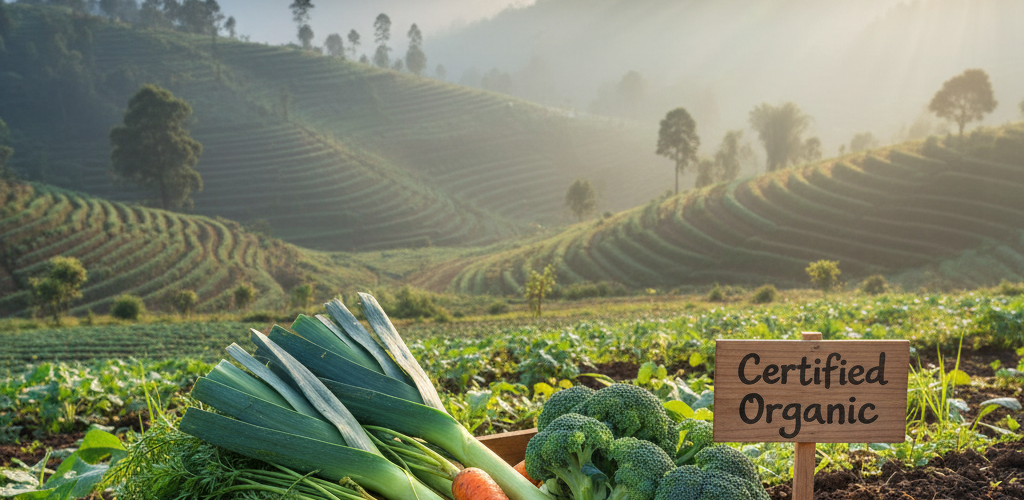
When you choose produce from platforms like NunuFresh, you are supporting a supply chain that values these principles, ensuring that the crisp carrots and leeks from Nuwara Eliya are grown with respect for both the consumer and the environment.
The Heart of Organic Growth: Nuwara Eliya’s Transformation
Nuwara Eliya, often called ‘Little England,’ is the hub of up-country vegetable production. The cool climate and high altitude are perfect for temperate vegetables like broccoli, bell peppers, and strawberries. However, the intensive use of chemicals in the past led to concerns about soil health in the region.
Today, a growing number of Nuwara Eliya farmers are embracing organic practices. They are moving away from synthetic nitrogen and toward composting and bio-fertilizers. This transition is not easy—it requires a minimum of three years of ‘conversion’ time before a farm can be fully certified. During this time, the soil is allowed to detoxify, and natural ecosystems are restored. This dedication is what makes certified organic produce from this region so special.
The Challenges of Getting Certified
Despite the growth, the road to certification is paved with challenges for the average Sri Lankan farmer. The cost of certification can be high, involving regular audits, soil testing, and administrative fees. For a smallholder farmer in a rural village, these hurdles can feel insurmountable.
This is where collective certification and ‘Participatory Guarantee Systems’ (PGS) come into play. These systems allow groups of farmers to support one another and self-regulate, making certification more affordable and accessible. By purchasing from trusted sources that vet their suppliers, consumers help bridge the gap for these farmers, ensuring they have a reliable market for their clean produce.
How to Identify Real Organic Produce
As the market grows, so does ‘greenwashing’—where products are labeled as ‘natural’ or ‘farm-fresh’ without actual certification. To ensure you are getting the real deal, look for these indicators:
1. The Certification Logo
Look for the SLSI organic logo or international marks like the ‘Euro-leaf’ or USDA seal. These are legally protected symbols that guarantee the product has met specific standards.
2. Traceability
A reputable seller should be able to tell you exactly which farm your vegetables came from. Transparency is a hallmark of the organic movement. Farmers who partner with NunuFresh take pride in their work, often maintaining close ties with the distributors to ensure their hard work is recognized by the end consumer.
3. Seasonal Variations
True organic farming follows the rhythm of nature. If a vegetable is ‘out of season’ but available in abundance and looking suspiciously perfect, it may not be organic. Organic produce often has natural variations in size and shape, reflecting a growth process free from growth hormones.
The Future of Sri Lankan Agriculture
The future of agriculture in Sri Lanka is undeniably green. With advancements in ‘Agri-Tech,’ farmers are now using apps to track soil health and blockchain to provide 100% traceability for their crops. The government’s focus on sustainable agriculture, despite past policy hiccups, remains a core part of the national vision for food security.
Moreover, the rise of home gardening during recent years has given Sri Lankans a firsthand appreciation for the effort it takes to grow food without chemicals. This has fostered a deeper respect for organic farmers who do this on a large scale to feed the nation.
Conclusion: Making the Choice for Your Family
The rise of organic certification in Sri Lankan agriculture is a testament to our resilience and our desire for a healthier future. It represents a commitment to the land, the farmer, and the health of every citizen. While the journey toward a fully organic nation is ongoing, every purchase of certified or verified chemical-free produce is a vote for a better system.
By choosing to eat seasonally and supporting local farmers who prioritize safety over speed, we can ensure that the ‘Garden of the East’ continues to flourish for generations to come. It’s about more than just food; it’s about a lifestyle of wellness and integrity.
Ready to bring the taste of Nuwara Eliya’s finest, most wholesome produce to your kitchen? Explore the wide selection of fresh, sustainably grown vegetables and fruits at NunuFresh and experience the difference that quality and care make.