No products in the cart.
Traditional Sri Lankan Farming Methods Making a Comeback
The Resurgence of Ancient Wisdom in Modern Sri Lankan Agriculture
For centuries, Sri Lanka was celebrated as the ‘Granary of the East.’ Our ancestors didn’t just grow food; they cultivated a sophisticated ecosystem that worked in harmony with nature. In recent decades, the ‘Green Revolution’ introduced chemical fertilizers and pesticides that promised high yields but often at the cost of soil health and nutritional value. However, a quiet revolution is happening across the island. From the misty hills of Nuwara Eliya to the dry zones of Anuradhapura, traditional Sri Lankan farming methods are making a significant comeback.
Today’s Sri Lankan families are increasingly health-conscious, seeking out produce that is free from harmful chemicals. This shift in consumer demand, coupled with a global move toward sustainability, has led farmers back to the roots of our agricultural heritage. At NunuFresh, we see this transition firsthand as we partner with growers who are blending ancestral wisdom with modern logistics to bring the purest produce to your doorstep.
The Revival of Indigenous Seeds (Paramparika Beeja)
One of the most vital components of this comeback is the preservation and cultivation of indigenous seed varieties. Modern hybrid seeds often require heavy chemical inputs to thrive, but our traditional seeds—known as Paramparika Beeja—have evolved over millennia to be naturally resilient to local pests and climate fluctuations.
Why Indigenous Seeds Matter
Traditional rice varieties like Suwandel (known for its aroma), Pachchaperumal (vibrant purple and rich in nutrients), and Kalu Heenati are no longer just stories told by our grandparents. They are reappearing in markets across the country. These varieties are higher in fiber, have a lower glycemic index, and contain more antioxidants than standard white rice. Similarly, heirloom vegetable varieties, such as traditional varieties of brinjal and long beans, are being rediscovered for their superior flavor and hardiness.
The Wisdom of ‘Kem’ Methods: Natural Pest Control
Before the era of synthetic pesticides, Sri Lankan farmers utilized ‘Kem’ methods—a collection of traditional practices and rituals designed to manage pests without harming the environment. While some aspects of Kem are deeply spiritual, many are rooted in biological and ecological science.
- Light Traps: Using oil lamps to attract and manage nocturnal pests.
- Botanical Extracts: Using leaves from the Neem tree (Kohomba), ginger, and garlic to create natural repellents.
- Biological Diversity: Encouraging birds and beneficial insects to live within the farm to act as natural predators for pests.
By returning to these methods, farmers in regions like Nuwara Eliya are significantly reducing their reliance on toxic sprays, ensuring that the vegetables delivered by services like NunuFresh are as clean as nature intended.
Restoring Soil Health with Bio-fertilizers
The long-term use of chemical fertilizers has, in many areas, led to ‘tired’ soil—earth that is depleted of its natural microbial life. The comeback of traditional farming focuses heavily on soil regeneration. This involves the use of Goma Pohora (cow dung), green manure (leaf mulch), and compost made from organic farm waste.
The Role of Nitrogen-Fixing Plants
Traditional farmers often plant ‘Gliricidia’ along their boundaries. Known as the ‘miracle tree’ in Sri Lankan agriculture, its leaves are rich in nitrogen and make an excellent green manure. By incorporating these organic materials back into the earth, farmers are restoring the soil’s structure, improving its water-retention capacity, and producing vegetables that are denser in micronutrients.
The Kandyan Forest Garden (Govipola) Model
Internationally recognized as one of the most sustainable farming systems in the world, the ‘Kandyan Forest Garden’ or Govipola is seeing a resurgence. This method involves multi-cropping, where trees of different heights and types are grown together. You might find pepper vines climbing coconut trees, with coffee bushes, banana trees, and ginger plants growing in the shade below.
This mimics a natural forest ecosystem, preventing soil erosion and creating a self-sustaining cycle of nutrients. For the modern consumer, this means a wider variety of seasonal produce is available throughout the year, grown in a way that protects Sri Lanka’s precious biodiversity.
Nuwara Eliya: Blending the Old with the New
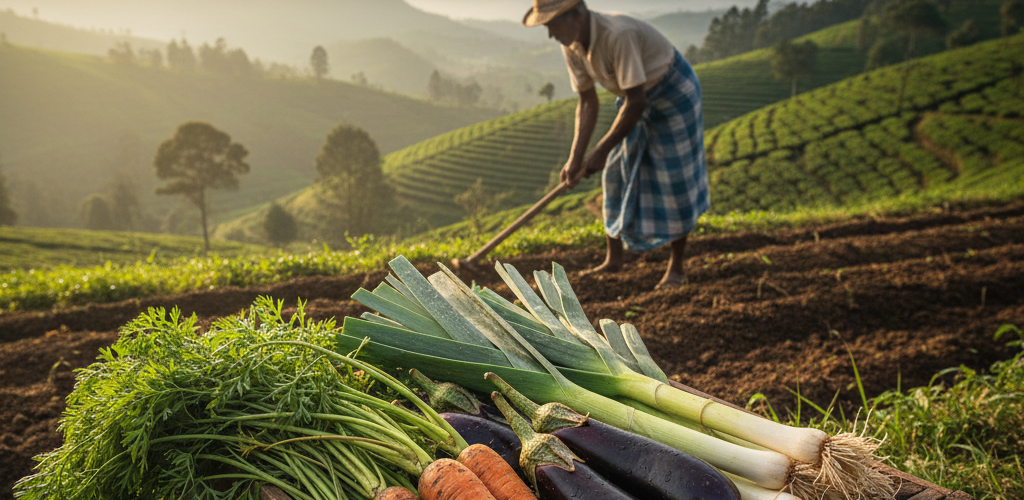
Nuwara Eliya is often called the vegetable capital of Sri Lanka. While it was once heavily associated with intensive chemical farming, a new generation of farmers in the hills is leading the charge toward organic and integrated pest management (IPM). The cool climate and rich soil are perfect for high-value crops, and by applying traditional soil-building techniques, these farmers are producing some of the highest quality leeks, carrots, and potatoes in the region.
At NunuFresh, we prioritize sourcing from these forward-thinking farmers. We believe that the future of Sri Lankan food security lies in looking back at what worked for our ancestors and adapting it for the 21st century.
The Benefits for the Sri Lankan Consumer
Why should you care about the return of these traditional methods? The benefits extend far beyond the farm gate:
- Better Taste: Organically grown, traditional varieties often have a more robust, ‘real’ flavor compared to mass-produced hybrids.
- Nutritional Density: Healthy soil produces healthy plants. Traditional methods focus on feeding the soil, which in turn feeds you better nutrients.
- Environmental Protection: By supporting traditional farming, you are helping to protect Sri Lanka’s water tables and soil for future generations.
- Supporting Local Communities: These methods are often labor-intensive and support small-scale family farms rather than large industrial corporations.
Conclusion: A Greener Future for Your Kitchen
The comeback of traditional Sri Lankan farming methods is more than just a trend; it is a vital necessity for our health and our planet. By embracing the wisdom of the past—from indigenous seeds to natural pest control—we are ensuring a safer, tastier, and more sustainable food system for our children.
Are you ready to bring the authentic taste of the Nuwara Eliya hills into your home? Discover the difference that traditional care and organic practices make. Explore NunuFresh’s selection of fresh, sustainably grown produce today and support the farmers who are keeping our heritage alive, one harvest at a time.