No products in the cart.
How Sri Lankan Farmers Are Going Organic: Challenges & Successes
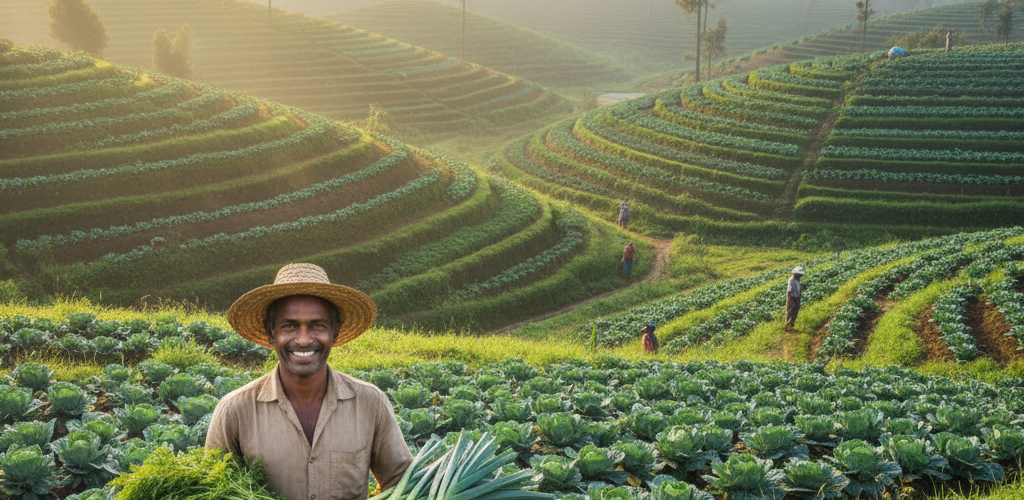
In the mist-covered highlands of Nuwara Eliya, a quiet revolution is taking root. For decades, the rolling hills of Sri Lanka’s central province have been synonymous with vibrant green tea estates and neatly terraced vegetable plots. However, the method of farming is undergoing a profound transformation. More and more Sri Lankan farmers are turning away from synthetic chemicals and returning to the wisdom of their ancestors: organic farming.
This shift isn’t just about a global trend; it is a deeply personal journey for many local growers who want to protect their land and provide healthier food for Sri Lankan families. In this article, we explore the intricate journey of our farmers as they navigate the challenges and celebrate the successes of going organic.
The Resurgence of Organic Farming in Sri Lanka
Organic farming in Sri Lanka is not a new concept. In fact, for over 2,500 years, our agricultural systems were entirely organic, utilizing complex irrigation networks and natural fertilizers. The ‘Green Revolution’ of the 1960s introduced chemical fertilizers and pesticides to boost yields, but today, the tide is turning back.
Sri Lanka currently has over 400,000 hectares of land under organic management, though much of this is dedicated to export crops like tea, coconut, and spices. However, the movement is rapidly expanding into the ‘Up-country’ vegetable sector. Farmers in regions like Nuwara Eliya and Welimada are increasingly adopting organic practices to grow carrots, leeks, potatoes, and cabbage.
Why the Shift? The Drivers Behind Organic Agriculture
The motivation for Sri Lankan farmers to go organic is multifaceted, ranging from environmental concerns to health-conscious consumer demand.
1. Restoring Soil Health
Years of intensive chemical farming have taken a toll on the soil. In Nuwara Eliya, where the terrain is steep, chemical runoff and soil degradation have become major concerns. Organic farming focuses on soil health as the foundation of agriculture. By using compost, green manure, and crop rotation, farmers are seeing a restoration of biodiversity within the soil itself, leading to more resilient crops.
2. Meeting Consumer Demand for Safety
Sri Lankan families are becoming increasingly aware of the link between diet and health. Concerns over pesticide residues in fresh produce have driven a surge in demand for ‘clean’ food. Farmers recognize that by going organic, they are tapping into a growing market of health-conscious urban consumers who are willing to pay a premium for produce they can trust.
3. Economic Independence
While the transition period is difficult, organic farming eventually offers farmers more economic independence. By producing their own fertilizers (compost) and biopesticides, they are less vulnerable to the fluctuating prices and supply chain disruptions of imported chemical inputs.
The Hurdles: Challenges Faced by Organic Farmers
Transitioning from conventional to organic farming is not as simple as stopping the use of chemicals. It is a rigorous process fraught with obstacles that require patience and resilience.
The Initial Yield Gap
One of the most significant challenges is the immediate drop in yield. When a farm stops using synthetic nitrogen, the soil takes time to recalibrate. During the first two to three years of transition, farmers often see a 20% to 30% reduction in harvest volume. For a small-scale farmer living season-to-season, this financial dip can be devastating.
Pest and Disease Management
In the humid, cool climate of Nuwara Eliya, pests and fungal diseases thrive. Without quick-fix chemical sprays, farmers must rely on integrated pest management (IPM) and botanical extracts like neem or ginger-garlic sprays. These methods require more labor and deep ecological knowledge to be effective.
The High Cost of Certification
To officially label produce as ‘Organic,’ farmers must undergo strict certification processes. For a solo farmer in a rural village, the paperwork and the fees associated with international or even local organic standards can be overwhelming. This is why many farmers choose to follow organic practices but lack the official ‘Certified Organic’ seal.
Success Stories: From the Hills to Your Plate
Despite these hurdles, there are numerous success stories. In villages surrounding Nuwara Eliya, clusters of farmers have formed cooperatives to share knowledge and resources. By working together, they produce high-quality compost on a large scale and share the costs of organic certification.
These farmers are seeing the benefits of their hard work. Their crops, though sometimes smaller or less ‘perfect’ in appearance than chemically treated counterparts, are denser in nutrients and have a significantly longer shelf life. This is where platforms like NunuFresh play a vital role. By connecting these dedicated farmers directly to consumers, NunuFresh ensures that the farmers receive a fair price that reflects the extra labor involved in organic cultivation.
How Technology is Supporting the Transition
Modern technology is surprisingly compatible with ancient organic wisdom. Sri Lankan farmers are now using mobile apps to monitor weather patterns and soil moisture, helping them time their organic treatments more effectively. Social media groups have also become a hub for farmers to swap recipes for organic liquid fertilizers and discuss natural ways to combat the dreaded ‘late blight’ in potatoes.
How You Can Support the Organic Movement
As a consumer, your choices directly impact the future of Sri Lankan agriculture. Every time you choose organic produce, you are voting for healthier soil, cleaner water, and more sustainable livelihoods for our farmers.
- Be Patient with Appearance: Organic vegetables may have slight blemishes or variations in size. This is a sign of natural growth without growth hormones or heavy waxes.
- Shop Seasonally: Organic farming follows the rhythm of nature. Enjoying vegetables when they are naturally in season ensures you get the best flavor and nutrition.
- Trust the Source: Look for transparent marketplaces that bridge the gap between the farm and your home.
At NunuFresh, we take pride in our close relationships with farmers in the Nuwara Eliya region. We understand the sweat and dedication that goes into every organic carrot and leek. By sourcing directly from these farms, we ensure that the freshness of the hills reaches your doorstep in the shortest time possible, preserving all those vital nutrients.
Conclusion: A Greener Future for Sri Lanka
The journey toward a fully organic Sri Lanka is a marathon, not a sprint. It requires a partnership between the government, the farmers, and the consumers. While the challenges of yield and pest management remain, the successes—seen in healthier soils and thriving rural communities—are proof that this is the right path forward.
By choosing organic, we aren’t just eating better; we are protecting the ‘Pearl of the Indian Ocean’ for generations to come. Let’s support our local farmers as they lead the way toward a greener, healthier Sri Lanka.
Ready to taste the difference of farm-fresh, naturally grown produce? Explore NunuFresh’s latest selection of vegetables harvested directly from the fertile soils of Nuwara Eliya and delivered straight to your home.