No products in the cart.
Best Vegetables to Buy in Sri Lanka This Season
In Sri Lanka, the vibrant colors of a local ‘pola’ (market) are more than just a feast for the eyes; they are a map of our island’s rich agricultural heritage. For every Sri Lankan mother and home cook, selecting the right vegetables isn’t just about filling a basket—it’s about ensuring the health, vitality, and happiness of the family. However, with the changing weather patterns and the complexities of our two main cultivation seasons, knowing exactly what to buy and when can be a challenge.
As we navigate the Maha season (which typically runs from October to March), the markets are currently brimming with some of the finest produce the island has to offer. From the mist-covered hills of Nuwara Eliya to the sun-drenched fields of the dry zone, this is the peak time for freshness. In this guide, we’ll explore the best vegetables to add to your kitchen this season, why they are nutritionally superior right now, and how you can bring the best of the farm directly to your table.
Understanding the Maha Season Harvest
Sri Lankan agriculture is defined by two major monsoon-driven seasons: Maha and Yala. The Maha season is the most significant for our vegetable supply, as the northeast monsoon provides ample hydration for crops across the country. By February and March, the heavy rains have usually subsided, leading to a massive harvest period.
During this window, the quality of vegetables reaches its peak. Because the soil is nutrient-dense from the recent rains and the plants have reached full maturity, the flavor profiles—especially in root vegetables—are exceptionally sweet and robust. According to recent agricultural data, the Maha season accounts for the bulk of Sri Lanka’s vegetable production, with crops like carrots, leeks, and cabbage seeing their highest yields and best quality during these months.
The Nuwara Eliya Advantage
Often referred to as “Little England,” Nuwara Eliya is the crown jewel of Sri Lankan agriculture. Its unique high-altitude climate and cool temperatures make it the perfect environment for “up-country” vegetables that simply cannot thrive elsewhere on the island. When you buy vegetables from this region during the current season, you are getting produce that has grown slowly and naturally in the crisp mountain air.
At NunuFresh, we recognize that the journey from the soil of Nuwara Eliya to your kitchen table is critical. Research shows that Sri Lanka loses nearly 270,000 tons of vegetables and fruits annually due to post-harvest wastage during traditional transport. By sourcing directly from these highland farms, we ensure that the freshness is locked in, delivering produce that hasn’t spent days in a humid truck.
Top Up-Country Vegetables to Buy Now
1. Nuwara Eliya Carrots
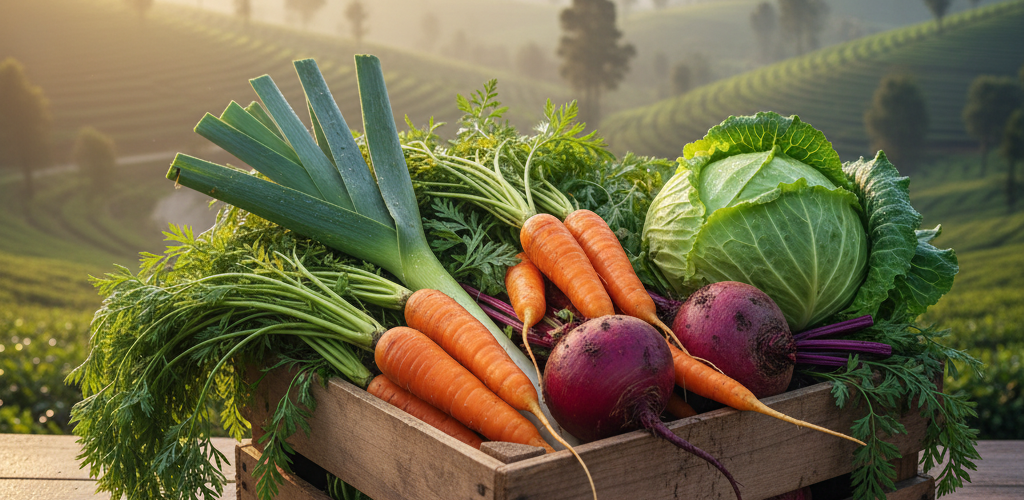
The carrot is a staple in every Sri Lankan household, but not all carrots are created equal. This season, the carrots coming out of the hill country are at their sweetest. They are packed with Beta-carotene, which the body converts into Vitamin A—essential for eye health and a strong immune system. When selecting, look for a deep, vibrant orange color and a firm texture. If you can find them with the green tops still attached, it’s a sign of ultimate freshness.
2. Crisp Leeks
A base for many of our favorite stir-fries and soups, leeks are currently in high supply. Nutritionally, leeks are a fantastic source of Vitamin K and manganese. During the Maha harvest, they tend to be thicker and more succulent. The white and light green parts offer a mild, onion-like sweetness that is perfect for a creamy leek and potato curry.
3. Nutrient-Dense Cabbage
Whether it’s the classic green cabbage or the vibrant red variety, this cruciferous vegetable is a powerhouse during the cooler months. Cabbage is high in Vitamin C and fiber, making it excellent for digestion. In Nuwara Eliya, the heads are currently tight, heavy, and crisp. A quick tip: the heavier the cabbage feels for its size, the fresher and more hydrated it is.
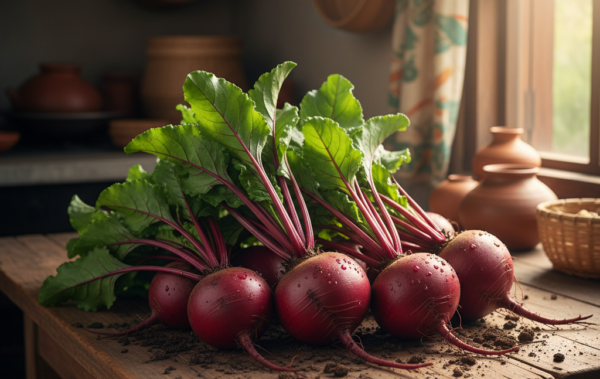
4. Earthy Beetroot
Beetroot is one of the most visually stunning vegetables in our markets. Rich in nitrates, it helps improve blood flow and lower blood pressure. The current season produces beets that are exceptionally tender. Don’t throw away the leaves! The greens of the beetroot are edible and packed with more iron than spinach—try them in a quick mallum.
Native and Low-Country Staples
While the hills provide our salads, the low-country and dry zones provide the heart of our traditional curries. These vegetables are often hardier and have deep roots in Ayurvedic medicine.
Pumpkin (Watakka)
Pumpkin is available year-round, but it is particularly abundant and affordable at the end of the Maha season. Known for being easy on the stomach, it is a primary weaning food for Sri Lankan babies. It is rich in antioxidants like alpha-carotene and beta-carotene, which help protect your cells from damage.
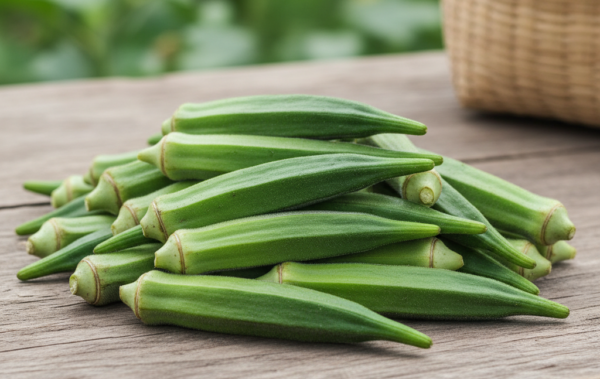
Okra (Bandakka)
Okra thrives in the warmer parts of Sri Lanka. This season, the pods are slender and snap easily, indicating they are young and not “woody.” Okra is famous for its high mucilage content, which is a fancy way of saying it’s great for gut health and coating the stomach lining—perfect for those who enjoy spicy food!
Winged Beans (Dambala)
A true local treasure, Dambala is a seasonal favorite that is currently making its way into markets. It is one of the highest sources of plant-based protein among all vegetables. In Ayurveda, it is praised for balancing body humors and providing a boost of energy during the humid transition between seasons.
The Importance of Choosing Organic
As health consciousness grows in Sri Lanka, more families are turning toward organic produce. Traditional farming in Sri Lanka was inherently organic for centuries, using natural compost and crop rotation. Today, the shift back to these roots is vital. Choosing organic produce from marketplaces like NunuFresh ensures that your family is consuming food free from harmful synthetic pesticides and chemical fertilizers.
Organic vegetables often have a higher dry matter content, meaning they aren’t just “watered up” to look big—they are packed with more actual nutrients and a more concentrated flavor. When you taste an organic carrot from Nuwara Eliya, you’ll notice a distinct sweetness that chemical-heavy farming often masks.
How to Select and Store Your Seasonal Produce
To get the most out of your purchase, follow these simple tips:
- The Snap Test: For beans and okra, the vegetable should snap cleanly when bent. If it bends without breaking, it’s likely old.
- Root Integrity: For carrots and beetroot, ensure the tips are firm. Soft tips indicate that the vegetable is starting to dehydrate.
- Leafy Greens: Look for ‘Gotu Kola’ or ‘Mukunuwenna’ that is vibrant green without yellowing edges. Store them by wrapping in a damp cloth and placing them in the crisper drawer.
- Don’t Wash Immediately: To extend the shelf life of root vegetables, don’t wash them until you are ready to use them. The light coating of soil actually helps preserve them.
Conclusion
Eating with the seasons is the best way to support your health, your wallet, and our local farming community. In these months, the bounty of Sri Lanka is at its finest, offering a variety of flavors and nutrients that are perfect for the Sri Lankan palate. By choosing fresh, seasonal, and ideally organic produce, you are making a conscious choice for a better lifestyle.
Ready to experience the true taste of Nuwara Eliya? Explore our latest harvest of organic, farm-fresh vegetables at NunuFresh and have the best of the season delivered straight to your doorstep.