No products in the cart.
Sustainable Farming in Sri Lanka’s Hill Country | NunuFresh
The Heart of Sri Lankan Agriculture: The Hill Country
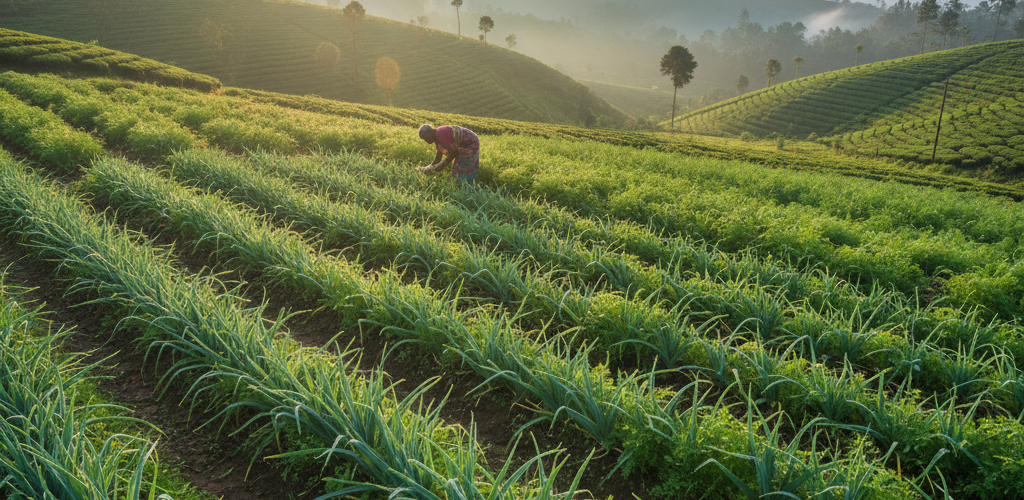
Sri Lanka’s central highlands, particularly the emerald landscapes of Nuwara Eliya, have long been celebrated as the “Salad Bowl” of the nation. With its cool temperatures, high humidity, and unique mist-laden microclimate, this region provides the ideal conditions for growing exotic vegetables that cannot thrive in the tropical lowlands. However, the beauty of the Hill Country hides a delicate ecological balance. For decades, traditional intensive farming methods faced challenges like soil erosion and chemical dependency. Today, a quiet revolution is taking place. Sustainable farming practices are transforming the way we grow our food, ensuring that the fertile soil of Nuwara Eliya remains productive for generations to come.
For Sri Lankan families, this shift isn’t just about the environment; it’s about health. When we choose produce grown through sustainable methods, we are choosing vegetables with higher nutrient density and fewer chemical residues. At NunuFresh, we believe that understanding where your food comes from is the first step toward a healthier lifestyle. Let’s dive deep into the sustainable practices that are defining the future of agriculture in Sri Lanka’s Hill Country.
1. Soil Conservation and Contour Farming
One of the greatest threats to farming in the central highlands is the steep terrain. Without proper management, heavy monsoon rains can wash away the nutrient-rich topsoil, leading to landslides and depleted land. Sustainable farmers in Nuwara Eliya have adopted Sloping Agricultural Land Technology (SALT) and contour farming to combat this.
The Power of Terracing
By creating terraces or planting along the natural contours of the land, farmers create “steps” that slow down water runoff. This allows moisture to soak into the ground rather than stripping the soil away. In areas like Welimada and Badulla, you will see beautiful tiered gardens that are as functional as they are scenic. These methods help maintain the soil’s organic matter, ensuring that crops like potatoes and carrots get the steady supply of minerals they need to grow large and flavorful.
2. The Shift to Organic Fertilization and Composting
For years, the reliance on synthetic fertilizers was the norm. While they provided quick growth, they often left the soil “dead” over time, destroying beneficial microbial life. Sustainable farming in Sri Lanka is now pivoting back to traditional wisdom, enhanced by modern science: Organic Composting.
Farmers are increasingly using green manure, livestock waste, and crop residues to create rich, dark compost. This organic matter doesn’t just feed the plants; it feeds the soil. It improves the soil structure, making it more resilient to drought and better at retaining nutrients. When you bite into a leek or a cabbage grown with organic compost, you can often taste the difference—the flavors are more robust, and the texture is crisper.
3. Integrated Pest Management (IPM)
Sustainability doesn’t mean letting pests win; it means managing them smarter. Integrated Pest Management (IPM) is a strategy that focuses on long-term prevention of pests through a combination of techniques such as biological control, habitat manipulation, and the use of resistant varieties.
- Natural Predators: Encouraging birds and beneficial insects that eat harmful pests.
- Crop Rotation: By changing the type of crop grown in a field each season, farmers break the life cycle of pests that target specific plants.
- Pheromone Traps: Using non-toxic traps to monitor and catch insects without spraying the entire field with chemicals.
This reduction in pesticide use is a win-win. It protects the biodiversity of the Hill Country—including our bees and butterflies—and ensures that the produce arriving at your table is as clean as nature intended.
4. Water Management and Drip Irrigation
While the Hill Country receives significant rainfall, water management is still crucial, especially during the dry “inter-monsoon” periods. Sustainable farms are moving away from wasteful flood irrigation and toward Drip Irrigation systems.
Drip irrigation delivers water directly to the root zone of the plant in precise amounts. This reduces water waste by up to 50% and prevents the growth of weeds that thrive in excess surface moisture. It also prevents the leaching of nutrients into local waterways, keeping Sri Lanka’s famous waterfalls and rivers pristine.
5. The Role of Protected Agriculture (Greenhouses)
In Nuwara Eliya, the weather can be unpredictable. Heavy rains can damage delicate crops like bell peppers, tomatoes, and salad leaves. Sustainable Protected Agriculture—using tunnels or greenhouses—allows farmers to control the environment. This reduces the need for chemical interventions, as the crops are shielded from wind-borne pests and extreme weather. It also allows for year-round production, ensuring that families can enjoy fresh produce even when the outdoor season is harsh.
Why Sustainable Produce Matters for Your Family
You might wonder, “Is there really a difference between a standard carrot and a sustainably grown one?” The answer is a resounding yes. Research shows that crops grown in healthy, organic-rich soil often have higher levels of Vitamin C, iron, and magnesium. Furthermore, by supporting sustainable farming, you are contributing to a food system that doesn’t exploit the land. You are ensuring that the farmers of Nuwara Eliya can continue their noble work for decades to come.
Platforms like NunuFresh play a vital role in this ecosystem. By sourcing directly from farms that prioritize these sustainable methods, NunuFresh bridges the gap between the mist-covered hills and your kitchen. This direct-from-farm model ensures that the produce hasn’t spent days in a humid warehouse, losing its nutritional value.
The Economic Impact on Local Communities
Sustainable farming isn’t just about the earth; it’s about people. When farmers adopt these practices, they often reduce their input costs (spending less on expensive imported chemicals) and earn better prices for their high-quality organic produce. This creates a more stable and prosperous life for the farming communities in the Hill Country. By choosing to buy local and organic, Sri Lankan consumers are directly investing in the rural economy and the well-being of our farmers.
Conclusion: A Greener Future for Sri Lanka
The journey toward 100% sustainable agriculture in Sri Lanka is ongoing, but the progress in the Hill Country is inspiring. From the innovative use of SALT to the return of organic composting, our farmers are proving that we can produce world-class vegetables while respecting Mother Earth. As consumers, we have the power to drive this change with every purchase we make.
Ready to taste the difference? Experience the crisp, untainted flavors of the Hill Country in your own home. Explore our wide selection of sustainably grown, farm-fresh vegetables and fruits. Visit NunuFresh.lk today and bring the best of Nuwara Eliya directly to your doorstep. Your family deserves the freshest, and the planet deserves our care.